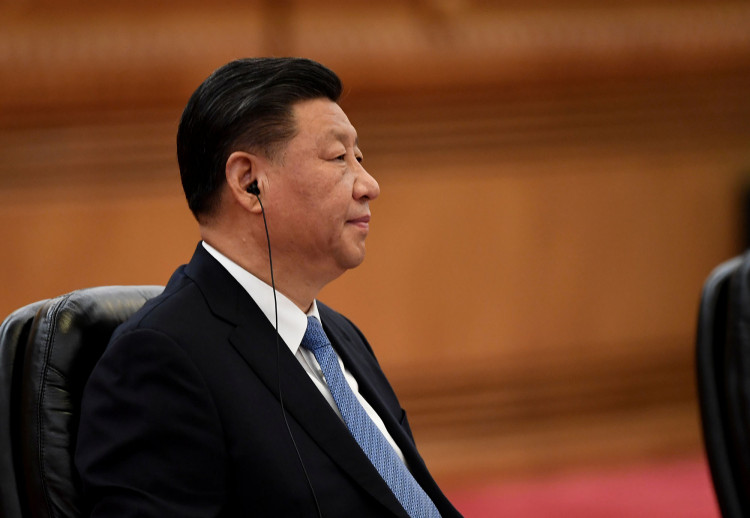
Chinese President Xi Jinping's sweeping anti-corruption campaign has evolved far beyond bribery and financial misconduct, with nearly one million officials punished in 2025 as authorities increasingly target political loyalty, personal behavior, family conduct and even spiritual beliefs, according to disciplinary records reviewed by The Wall Street Journal.
The figures underscore how Xi's signature governance initiative has expanded into one of the most extensive internal discipline efforts in Communist Party history. While corruption remains a primary focus, party investigators are now scrutinizing activities ranging from fortune telling and feng shui practices to gambling, extramarital relationships and ideological commitment.
According to The Wall Street Journal, disciplinary authorities punished almost one million individuals last year, marking the highest annual total since Xi came to power. The campaign reflects Beijing's broader effort to strengthen party control while reinforcing loyalty to Xi's political agenda.
The shift became increasingly visible after the 2014 downfall of former security chief Zhou Yongkang. Authorities accused Zhou not only of corruption but also of violating what officials described as "political discipline," a charge that has since become a recurring feature of disciplinary investigations.
Since then, misconduct allegations have expanded beyond financial crimes. Officials have been cited for failing to implement directives from Beijing, resisting policy priorities or displaying insufficient commitment to Communist Party principles.
Economic performance has become one area of heightened scrutiny. Authorities have increasingly criticized officials whose development strategies conflict with Xi's vision for a more innovative, environmentally sustainable and balanced economy.
One example highlighted by Chinese state media involved a former municipal party chief identified as Li. According to a documentary cited in reports, Li supported 23 tourism projects during his tenure, with 16 later deemed ineffective or abandoned.
Reflecting on those decisions, Li admitted: "I hoped to launch some grand undertakings and major moves, to create a big splash, thinking that only in this way could I attract the attention of my superiors."
The campaign has also extended into areas rarely associated with traditional anti-corruption efforts. More than 160 officials reviewed in disciplinary records were accused of engaging in activities labeled as superstition.
Those allegations included:
- Consulting fortune tellers
- Practicing feng shui
- Seeking guidance from spiritual figures
- Praying to gods or deities
- Believing in supernatural forces rather than party doctrine
Authorities have criticized some officials for "not believing in Marxism-Leninism but believing in ghosts and gods."
One former official, Bai, reportedly became known for repeatedly altering construction projects based on feng shui concerns. A retired local cadre recalled: "Every time the fountain is built and starts spraying water, he would say it was very good. Then within a few days, he would angrily demand that it be demolished and rebuilt."
The disciplinary drive has also expanded into private life. Investigators have increasingly focused on what authorities call "bad family values," targeting officials whose spouses or children allegedly benefited from political influence. Others have faced accusations involving gambling, lavish spending, misuse of government resources and inappropriate sexual relationships.
Xi signaled that the campaign remains a central priority during remarks to the Communist Party's disciplinary watchdog earlier this year. "The task of eradicating the soil and conditions that breed corruption remains arduous and onerous. We must maintain a high-pressure posture unswervingly," Xi said.