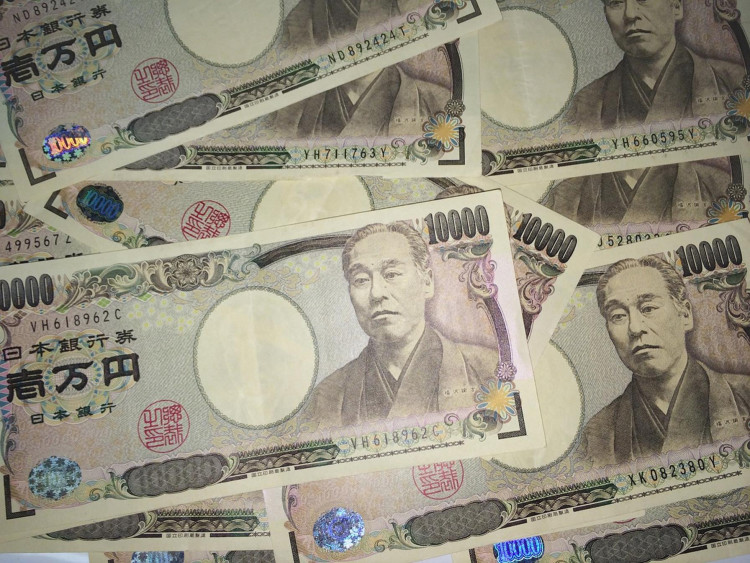
The Japanese yen surged through ¥153 to the dollar Tuesday, reaching its strongest level since February and prompting investors to consider whether the currency's prolonged weakening trend is beginning to reverse as expectations build for tighter Bank of Japan policy.
The yen strengthened as far as ¥152.9 after breaking ¥154 shortly after 8 a.m. in Tokyo and crossing ¥153 around 11:20 a.m., according to The Japan Times. It later surrendered some of those gains, moving back above ¥153 and toward ¥154 during the afternoon.
The move extends a rebound that began Sept. 2 and represents a sharp change from late July, when the yen traded near ¥164 to the dollar, its weakest level in about 40 years. Japan and the U.S. subsequently intervened to support the currency, pushing it toward ¥155 before it weakened again to around ¥160.
Analysts said the latest advance doesn't appear to reflect fresh intervention. Instead, markets are reassessing Japan's policy outlook amid U.S. pressure on Tokyo and growing expectations that the BOJ will raise rates more aggressively.
"With U.S. Treasury Secretary Scott Bessent leaning more aggressively on Japan to adjust economic policy, the market is reassessing the Bank of Japan's rate increase path and the fiscal policies of Prime Minister Sanae Takaichi," Toru Suehiro, chief economist at Daiwa Securities, wrote in a report cited by The Japan Times.
Markets are now pricing in a 97% probability that the BOJ will raise its policy rate by 25 basis points to 1.25% next week, up from 52% a month ago, according to data cited by Reuters. Expectations are also increasing for another rate increase later this year.
The yen's rapid appreciation is putting pressure on the carry trade, a longstanding strategy in which investors borrow cheaply in yen and invest in higher-yielding currencies and assets. Cross-border yen borrowing reached a record ¥360 trillion, or about $2.35 trillion, as of March, according to a Jefferies analysis of Bank for International Settlements data cited by Reuters.
"The carry trade is vulnerable because this unwind is happening before the BOJ has even delivered its expected hike," Charu Chanana, chief investment strategist at Saxo, told Reuters.
Investors have been reducing short-yen positions as the currency passed key levels. Masahiko Loo, senior fixed-income strategist at State Street Investment Management, said the break below ¥155 appeared to trigger another round of short covering among leveraged funds and longer-term investors.
The yen has also gained nearly 5% this month against currencies frequently used in carry trades, including the Mexican peso and Turkish lira. Three-month implied volatility in dollar-yen trading has risen to a six-month high, increasing the risk of maintaining positions that rely on a stable, weak Japanese currency.
Japan's domestic investment outlook is adding to expectations of a stronger yen. Finance Minister Satsuki Katayama has said the government could encourage the ¥318 trillion Government Pension Investment Fund to increase its holdings of Japanese assets, potentially directing more capital toward domestic markets.
Still, the durability of the rally may depend on what the BOJ delivers next week. Expectations for tighter policy have risen rapidly, leaving the yen vulnerable to another reversal if Governor Kazuo Ueda signals a slower path than investors anticipate.
"This implies a shift in the prevailing weak-yen narrative," Suehiro wrote.