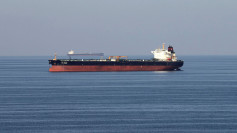
Oil prices climbed sharply Thursday after Yemen's Houthi movement said it struck two Saudi oil tankers while enforcing its newly announced embargo on Saudi crude shipments through the Red Sea. The reported attacks mark the first time the Iran-backed group has claimed to target Saudi tankers in the waterway since announcing the embargo earlier this week.
Brent crude, the international benchmark, rose about 5% to just under $100 a barrel Thursday morning, while U.S. benchmark West Texas Intermediate gained roughly 4.5% to $90.73 a barrel. The move came as investors weighed the growing risks to global oil supplies as the conflict involving Iran continued to escalate.
The Houthis said Monday that the embargo was based on the "equation of 'an eye for an eye'" and vowed to "respond to all escalation with all escalation, thus solidifying this equation." On Thursday, the group said it had begun enforcing that policy by striking two Saudi tankers in the Red Sea.
The group also warned Saudi Arabia against further involvement in the conflict, saying it was prepared "for all options, and any foolish act committed by the reckless Saudi enemy through all escalation will be met with a comprehensive and decisive escalation by Allah's will and power."
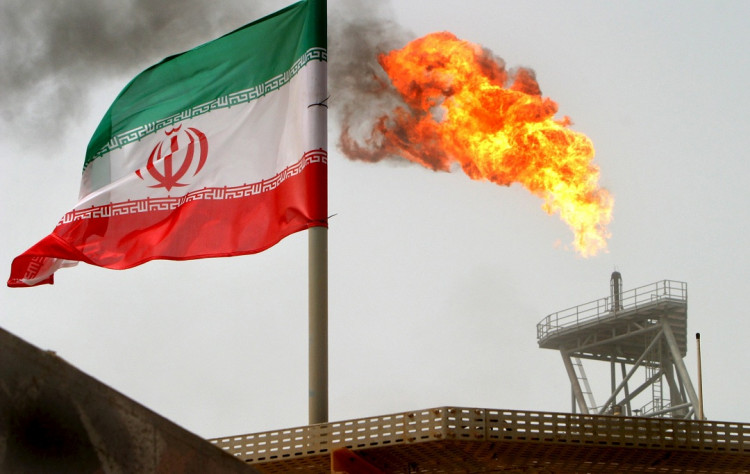
The latest developments come as Tehran has also pledged to manage shipping through the Strait of Hormuz. According to the report, Iranian forces have been targeting vessels attempting to transit the strategic waterway without coordinating with Tehran.
Shipping disruptions have already begun to spread. Reuters reported Wednesday that seven vessels bound for Asia had reversed course following the Houthi embargo announcement, highlighting growing concern among commercial shipping operators.
CNBC reported that Saudi Arabia has been redirecting millions of barrels of oil per day from the Strait of Hormuz to the Red Sea because of the conflict. The Houthis' effort to block those shipments has added another layer of disruption to global energy markets.
Traffic through the Strait of Hormuz has also declined sharply. Citing Lloyd's List Intelligence, CNBC reported that only 53 vessels crossed the waterway during the week ending July 20, a 66% decline from the previous week. Data from Kpler also showed daily vessel crossings fell from more than 20 before July 15 to single digits after hostilities resumed and Iran began targeting ships that did not follow routes approved by Tehran.
As military tensions continued, Secretary of State Marco Rubio said Washington would maintain pressure on Iran until it agreed to what he described as a meaningful peace settlement.
"The price Iran will pay will get higher every night" until Tehran is prepared to reach a meaningful peace agreement, Rubio said. He added, "Iran is begging (for a deal) every day. The problem with Iran is every time they make a deal ... they either break it or they want to change it. So now they're paying the price for it. And maybe they'll change their mind here over the next few days as they continue to suffer great losses."