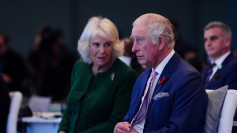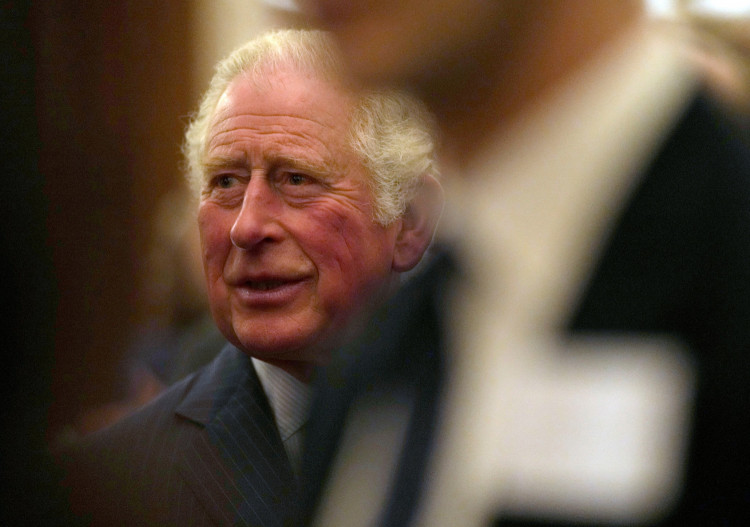
Jamaica is taking its campaign for slavery reparations directly to King Charles III, asking the monarch to invoke a rarely used legal mechanism that could produce an advisory opinion on whether Britain has a legal obligation to provide redress for the enslavement of Africans in the Caribbean nation.
A Jamaican delegation led by Culture Minister Olivia Grange arrived in London ahead of the planned submission Monday, Sept. 7. The petition asks Charles, who remains Jamaica's head of state, to refer three legal questions to the Judicial Committee of the Privy Council under the Judicial Committee Act 1833.
The questions focus on whether the forced transportation and enslavement of Africans in Jamaica was lawful under English law, whether the system violated international law and whether Britain consequently has a legal obligation to provide a remedy. The petition doesn't specify a monetary figure or ask Charles to order compensation.
Instead, Jamaica is seeking an advisory legal opinion that could shape how its government pursues reparatory justice. Grange has said the government would consider its next course of action after receiving a response, making the initiative a legal test of the historical case rather than an immediate demand for payment.
The move represents a new stage in a reparations campaign that has increasingly shifted from historical and political arguments toward questions of legal responsibility. Jamaica's government says it is the first Commonwealth state to use this particular referral mechanism in pursuing reparatory justice for slavery.
Grange has argued that slavery's consequences didn't end with emancipation, pointing to persistent disparities in education, healthcare and economic development. Jamaican officials have also connected those inherited disadvantages to the country's ability to finance responses to contemporary pressures, including increasingly costly climate-related disasters.
Central to Jamaica's argument is the way Britain handled emancipation in the 19th century. Parliament passed the Slavery Abolition Act in 1833, ending slavery across much of the British Empire while authorizing £20 million in compensation for slave owners whose enslaved workers were being freed.
Formerly enslaved people didn't receive equivalent compensation. The financing arrangements associated with the compensation program continued to have consequences for British public finances long afterward, with government borrowing linked to the program ultimately being repaid in 2015.
The London visit is also drawing attention to one of the most notorious episodes of the trans-Atlantic slave trade. Members of Jamaica's National Council on Reparations attended a remembrance service Sunday at New Park Road Baptist Church in Brixton commemorating the victims of the Zong massacre.
The British slave ship Zong sailed from the West African coast in 1781 carrying enslaved Africans to Jamaica. During the voyage, crew members threw at least 132 enslaved people overboard, an episode that subsequently became the subject of an insurance dispute in Britain and helped galvanize the emerging abolitionist movement.
Grange laid a floral tribute during the service. The remembrance places the delegation's legal initiative alongside an effort to emphasize the human consequences of the commercial system that connected British institutions, merchants and Caribbean plantations.
Jamaican representatives are also scheduled to meet British lawmakers during the trip. Separately, discussions are planned with British Museum officials concerning the possible return of Jamaican cultural objects removed during the colonial era.
The delegation includes representatives of Jamaica's Office of the Attorney General and the National Council on Reparations. Ralph Gonsalves, the former prime minister of St. Vincent and the Grenadines and an adviser to the Repair Campaign, has described the petition as a "critical milestone" for the broader Caribbean reparations movement.
Buckingham Palace has acknowledged the Jamaican initiative while emphasizing the constitutional limits of Charles's involvement. The King's function in the process would be procedural: the substantive legal questions raised by Jamaica would be considered by the Judicial Committee rather than decided personally by the monarch.
Charles has previously spoken publicly about Britain's involvement in slavery. At the Commonwealth Heads of Government Meeting in Rwanda in 2022, when he was Prince of Wales, Charles said, "I cannot describe the depths of my personal sorrow at the suffering of so many, as I continue to deepen my own understanding of slavery's enduring impact."