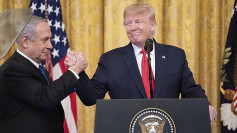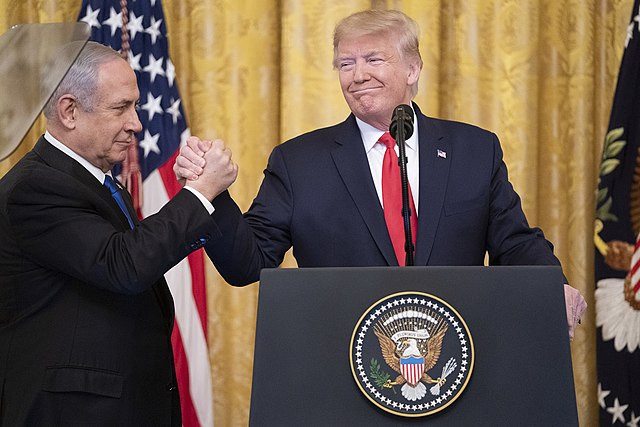
Israeli Prime Minister Benjamin Netanyahu pressed President Donald Trump to consider renewed military action against Iran before elections in both countries, according to disputed reports that have drawn denials from the White House and Netanyahu's office.
Channel 12 and Axios reported that Netanyahu raised concerns about Tehran rebuilding its nuclear program and received encouragement to prepare. An unnamed American official cited in the accounts said Trump made no commitment to launch an operation.
Axios quoted Trump's alleged response as "go ahead and get ready." A White House official called the claim that the leaders discussed restarting the war "false" and reiterated the president's pledge not to attack Iran before the November 3 U.S. midterms.
The conflicting accounts leave a distinction between reported preparations and authorization for military action. Netanyahu's office denied that he wanted fighting to resume before Israel's October 27 parliamentary election, while acknowledging regular contact with Trump and senior U.S. officials.
The issue gained attention Monday when three Israeli officials told Reuters that Defense Secretary Pete Hegseth had discussed Iran with Netanyahu during an unannounced visit to Israel. The Pentagon declined to comment, and the reporting disclosed no operational decision.
A day earlier, Trump endorsed Netanyahu's re-election bid, portraying his leadership as important to any further campaign against Iran. The endorsement followed increasingly forceful public warnings from both leaders, despite their stated reluctance to resume major fighting before voters go to the polls.
Asked about a pre-emptive strike before Israel's election, Netanyahu told Army Radio on October 14: "It is not convenient for us, it's no good," Reuters reported. He nevertheless warned that an Iranian attack would bring a strong Israeli response.
Election timing carries practical military consequences. According to Channel 12, Israel Defense Forces Chief of Staff Lt. Gen. Eyal Zamir warned that renewed hostilities could force a postponement of voting if Iranian missile attacks made polling unsafe.
Channel 12 also reported that Israeli intelligence officials had identified no new development requiring an imminent joint operation. Assessments described Iran's reconstruction efforts as slow and incomplete, even as Israeli forces and U.S. Central Command reportedly maintained high readiness.
Other reporting points to continued American contingency planning. The New York Times said administration officials had discussed an intense campaign lasting about three days, potentially targeting missile and drone capabilities, energy infrastructure and Revolutionary Guard headquarters.
The Atlantic separately reported that the White House had requested Pentagon options for strikes before the midterms. Neither account establishes that Trump approved an attack.
The military preparations are unfolding alongside continued Iranian disruption of shipping through the Strait of Hormuz and U.S. economic pressure on Tehran. A third American aircraft carrier is expected in the Middle East.
"Without a diplomatic settlement, the chances of escalation are very high," Danny Citrinowicz, a senior researcher at the Institute for National Security Studies, told JTA.
Avner Vilan, a former senior Israeli security official, said Trump had reasons to wait until after the midterms but warned that continued pressure could produce an unintended escalation.
"Everyone is on edge, and all it would take is one significant incident to send things spiraling out of control," Vilan said.