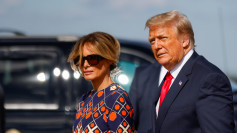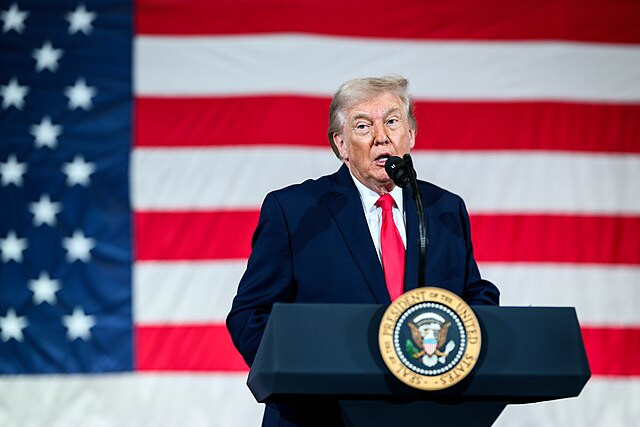
A physician's unproven theory that President Donald Trump suffered a previous stroke has resurfaced after renewed coverage of his walking, speech and aspirin use, despite White House denials and a presidential medical report describing normal neurological findings.
Timothy Noah revisited the allegations in The New Republic on October 19, citing comments Washington State University physician Bruce Davidson made on The Daily Beast Podcast in January. Davidson has not examined Trump and based his interpretation on public footage and the president's description of his medication.
The renewed attention concerns an earlier hypothesis rather than newly disclosed medical evidence. No confirmed stroke diagnosis appears in the supplied reporting.
Davidson suggested that Trump's movements could reflect weakness on his right side. He pointed to footage of the president shuffling, holding his right hand in his left and using his left hand to grasp an Air Force One stair railing, despite being right-handed.
Those observations led Davidson to speculate about an injury affecting the brain's left hemisphere. The footage, however, does not establish that Trump has weakness or identify a medical cause for the movements.
Davidson also said Trump appeared to jumble words more frequently in earlier appearances before his speech improved.
"That implicates Broca's speech area, which is in the frontal left portion of the brain," Davidson said during the January 26 podcast. His interpretation was not supported by an examination or disclosed neurological testing.
Trump's account of taking 325 milligrams of aspirin daily was another basis for Davidson's suspicion. The president told The Wall Street Journal in January that he took the medication to thin his blood.
"When I read that, I said, well, he's had a stroke," Davidson told the podcast.
Aspirin can be prescribed to help prevent another stroke in certain patients, but it also has other uses. The reported dose does not establish that Trump previously suffered one.
The White House's published explanation differs from Davidson's. A May 29 memorandum from presidential physician Dr. Sean P. Barbabella listed aspirin for "cardiac prevention" and recommended low-dose treatment, without specifying the president's dosage at that examination.
The memorandum summarized a May 26 assessment at Walter Reed National Military Medical Center. Barbabella reported normal motor strength, sensation, reflexes, gait and balance, and recorded a score of 30 out of 30 on the Montreal Cognitive Assessment.
Barbabella concluded that Trump was fit to carry out his presidential duties. Those reported findings provide a clinical account that contrasts with Davidson's interpretation of public appearances, although they do not constitute a complete medical history.
When the allegations first circulated in January, then-White House press secretary Karoline Leavitt dismissed them as "false and slanderous."
The May memorandum also attributed bruising on Trump's hands to frequent handshaking alongside aspirin use and described improving lower-leg swelling. The administration separately disclosed a diagnosis of chronic venous insufficiency in July 2025.
Davidson has called for fuller disclosure of the president's medical history to clarify his observations. He has also said that a confirmed previous stroke would not, by itself, mean a president was unable to serve.