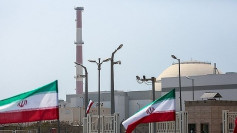
Iranian Foreign Minister Abbas Araghchi challenged President Donald Trump to renew military action against Tehran after the U.S. leader threatened to "finish the job" and endorsed Israeli Prime Minister Benjamin Netanyahu ahead of Israel's October 27 election.
The exchange came as Netanyahu declared that Israel could strike Iran without American support and said he had instructed security agencies to pursue the overthrow of its government. Trump did not specify what further action he was considering or announce a timetable.
"Last time you wanted to 'finish the job,' Iran emerged even stronger. Want to try your luck again? Be our guest. But be careful; we have unfinished jobs too," Araghchi wrote on social media.
Araghchi also accused Netanyahu of pushing Washington toward another war to avoid imprisonment. That assertion was the Iranian minister's characterization of Netanyahu's motives, rather than an established explanation for Israeli policy.
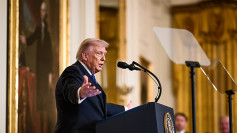
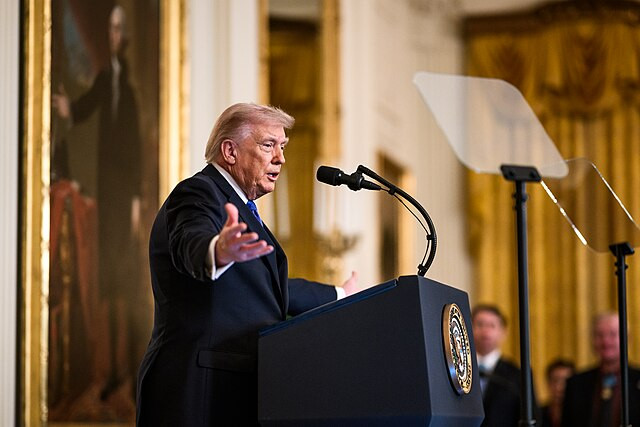
Trump's Sunday post on Truth Social combined a warning to Tehran with an appeal to Israeli voters. He claimed Iran had been severely weakened militarily and financially, adding: "Unless they change their ways, rapidly, we will soon finish the job."
The warning left unresolved how it fit with Trump's earlier statement that the United States would not attack Iran before the November 3 midterm elections. Earlier this month, he also described discussions with Tehran as productive.
Netanyahu, meanwhile, emphasized that Israel retained the option to act alone. Presenting an updated national security doctrine Sunday, he said Washington's approval was not a prerequisite for pursuing his objectives, according to Israel Hayom.
"To the extent necessary, we will also act independently. We have done so before, and if necessary, we will do so again," Netanyahu said.
He identified a nuclear-armed Iran as Israel's greatest security threat and argued that Tehran's economic problems and recent protests had weakened its government. His claim that "90% of the job is done" was his assessment, not an independently established measure.
"We must bring this regime down once and for all," Netanyahu said. "That is the directive I have given to all the security agencies."
Axios reported last week that Trump and Netanyahu had discussed a possible new operation against Iran after the Israeli leader raised concerns about intelligence indicating Tehran was attempting to rebuild its nuclear program.
The military rhetoric also became part of Israel's election campaign. Trump gave Netanyahu his full endorsement and suggested Washington might have to confront Iran alone under a different Israeli leader, something he said he was reluctant to do.
Netanyahu thanked Trump and praised their partnership. His principal electoral rival, Yashar party leader Gadi Eisenkot, expressed appreciation for the president but rejected outside influence over the choice of Israel's leadership.
"Israel's citizens are the only ones who will decide who the prime minister will be," Eisenkot told students at Tel Aviv University.
Recent surveys by Maariv, Channel 12, Channel 13 and KAN News put Yashar ahead of Netanyahu's Likud, but neither major bloc secured the 61 seats needed for a parliamentary majority. Their average placed the governing and opposition blocs at roughly 51 seats each in the 120-member Knesset, where coalition negotiations determine who becomes prime minister.