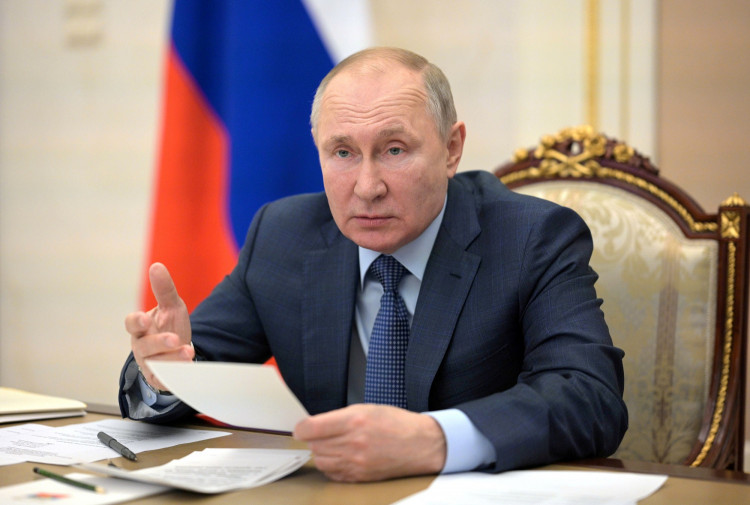
U.S. intelligence agencies have concluded that Russian President Vladimir Putin personally ordered an intensified sabotage campaign against NATO countries, according to The Wall Street Journal, placing a failed drone attack on a German cargo aircraft among its opening operations.
The assessment, described by European officials briefed on the findings, links the August attack at Leipzig-Halle Airport to a broader effort targeting European infrastructure and support for Ukraine. Russia denies responsibility for sabotage in Europe, and the Kremlin did not respond to the Journal's request for comment.
The alleged operation carried a significant risk of escalation. Aides to German Chancellor Friedrich Merz told the newspaper that Berlin would have considered invoking NATO's Article 5 collective-defense clause had the airport attack caused heavy casualties.
Germany had already formally blamed Russia for the attempt in September. The latest reporting extends the alleged chain of responsibility beyond military intelligence operatives to Putin himself.
The target was an Antonov cargo aircraft used to transport military assistance to Ukraine. According to investigators cited by the Journal, one drone struck the plane but failed to explode.
German cyber officials traced communications associated with the operation to servers previously used by Russian military intelligence, the report said. Western officials attributed the campaign to the GRU's Special Tasks Service, a branch established in 2023.
Investigators also traced the alleged plot's logistics through Serbia, where they believe a former Russian officer worked with Belarusian operatives. Serbian prosecutors have arrested seven suspects, according to the Journal.
European officials described an increase in covert attacks since August, including fires at drone manufacturers in Estonia and Poland, damage to Starlink stations in Poland, Lithuania and Bulgaria, and attacks on merchant vessels in the Black Sea.
A Kremlin back-channel contact reportedly warned Berlin after the Leipzig incident that further attacks would follow. German officials have said the airport operation "fits the established pattern of Russian hybrid operations in Europe."
The allegations align with a September assessment by the Danish Defence Intelligence Service, which warned that Russia had intensified sabotage, destructive cyberattacks and drone operations against European targets.
The agency said Moscow had "become more willing to take risks" and warned of possible sabotage against defense companies in Denmark. It characterized the broader confrontation as an escalating hybrid war.
The Danish assessment also described Russia as facing severe battlefield losses and mounting economic pressure. It projected no major Russian breakthrough in Ukraine over the following six months and judged Putin unlikely to compromise on his central war objectives.
Separately, Moscow has threatened to use nuclear weapons if NATO attempts to isolate Kaliningrad, Russia's Baltic enclave. A Russian document reported by Reuters warned of strikes against alliance decision-making centers from the outset of a direct conflict.
France recently tested an updated submarine-launched ballistic missile capable of carrying a nuclear warhead, its defense ministry said. The missile carried no nuclear warhead during the exercise, and the announcement did not identify Russia as the reason for the test.