Government bond markets came under renewed pressure Tuesday as escalating fighting between the U.S. and Iran pushed oil prices higher, reviving inflation concerns and driving borrowing costs to levels not seen in decades across Japan, Britain and other major economies.
Japan's benchmark 10-year government bond yield briefly reached 3% for the first time since 1996, while its two-year yield climbed to the highest level in more than 30 years. In the U.S., the 10-year Treasury yield rose to about 4.79%, its highest since January 2025.
Britain experienced one of the sharpest moves. The 10-year gilt yield climbed above 5.23%, reaching its highest level since the 2008 global financial crisis, while the 30-year yield approached 5.9%, a level last seen in 1998.
The selloff also extended into continental Europe. Germany's 10-year Bund yield rose above 3.3%, while shorter-dated government borrowing costs increased in Germany and France as investors recalibrated expectations for inflation and central-bank policy.
The latest bond-market weakness followed another escalation in the confrontation between Washington and Tehran. U.S. forces struck Iranian-held islands near the Strait of Hormuz, prompting missile retaliation from Iran and adding to concerns about the security of one of the world's most important energy corridors.
Shipping through the Strait of Hormuz has remained severely disrupted during the conflict. Before the latest hostilities, the waterway handled roughly one-fifth of global oil supplies, making any prolonged interruption a potentially significant shock to energy prices and inflation.
Iranian President Masoud Pezeshkian said Tuesday that Tehran would respond in kind if Washington returned to the memorandum of understanding signed by the two countries in June. President Trump, however, has rejected returning to negotiations in recent days.
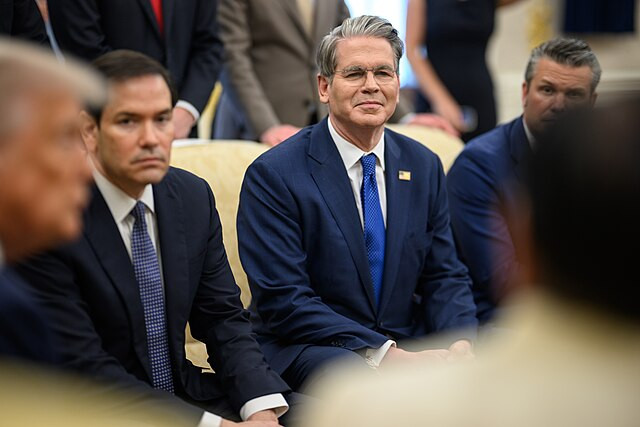
Washington is also preparing to increase financial pressure on Tehran. Treasury Secretary Scott Bessent said the U.S. would intensify economic measures against Iran this week.
"This is going to be financial violence if we have to," Bessent said. "We are showing people that we know who you are, you know who you are, and this has got to stop."
The renewed rise in energy prices is complicating the outlook for central banks. Persistent increases in oil, fuel and transportation expenses can move beyond energy markets and feed into broader consumer prices, making policymakers more reluctant to lower interest rates even as economic growth comes under pressure.
Investors had already been questioning whether some major central banks might need to maintain tighter monetary policy for longer or even consider additional tightening. According to the Financial Times, growing concern over government borrowing requirements and expanding debt burdens has added another layer of pressure to longer-maturity bonds.
Those concerns are particularly important because longer-term yields reflect more than expectations for near-term policy rates. Investors also demand compensation for inflation risk, fiscal uncertainty and the prospect that governments will need to issue large amounts of debt, factors that can push borrowing costs higher even without an immediate change in central-bank policy.
The latest market moves included:
- Japan 10-year government bond: touched 3%, highest since 1996.
- U.S. 10-year Treasury: rose to about 4.79%, highest since January 2025.
- U.K. 10-year gilt: climbed above 5.23%, highest since the 2008 financial crisis.
- U.K. 30-year gilt: approached 5.9%, highest since 1998.
- German 10-year Bund: moved above 3.3%.
Bessent sought to play down concerns about the relative performance of U.S. government debt while attending the G20 finance ministers' gathering in Asheville, North Carolina. He argued that Treasurys have held up better than sovereign bonds in several other developed economies despite the rise in American yields.