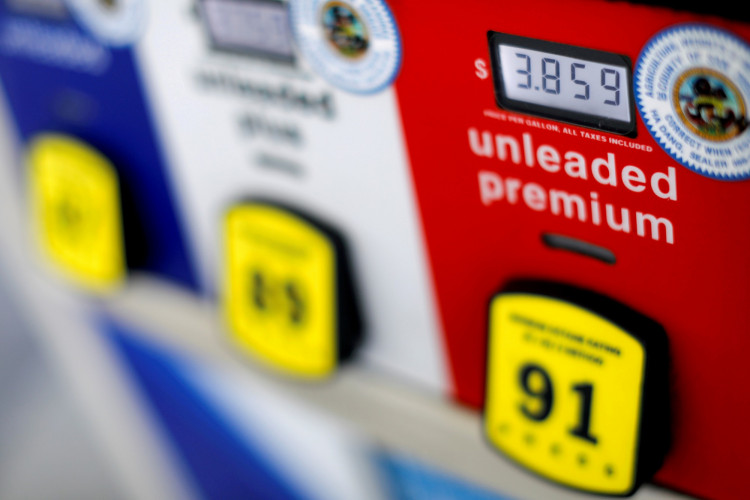
Average U.S. gasoline prices have climbed back above $4 per gallon for the first time in more than a month as the conflict between the United States and Iran continues to intensify, lifting crude oil prices and renewing concerns about energy supplies moving through the Strait of Hormuz. The rebound in fuel costs follows a sharp rally in global oil markets amid escalating military operations across the Middle East.
According to NBC News, the national average had fallen to $3.79 per gallon on July 7 before steadily rising as fighting expanded and Iran again moved to restrict shipping through the Strait of Hormuz, one of the world's most important oil transit routes. Investors have closely monitored developments in the region, where military exchanges have heightened fears of supply disruptions affecting global energy markets.
Oil prices surged by more than 15% last week before giving back a portion of those gains on Monday after remarks from Iranian officials were interpreted as signaling a possible return to negotiations. Even after the pullback, benchmark crude prices remained elevated.
As of 7:06 a.m. ET, market benchmarks stood at:
- Brent crude: $88.22 per barrel.
- West Texas Intermediate (WTI): $81.48 per barrel.
The latest increase in oil prices coincides with a worsening military situation. U.S. Central Command said a U.S. service member was killed in Iraq on Saturday, bringing the reported American death toll in the conflict with Iran to 17. More than 400 U.S. troops have also been wounded, according to the military.
The conflict broadened further after another attack on an American military installation in Jordan killed two U.S. service members. In response, the United States launched airstrikes Sunday targeting facilities associated with Iran's Islamic Revolutionary Guard Corps, continuing an expanding military campaign across the region.
U.S. Central Command said late Sunday that it had completed a ninth consecutive night of operations inside Iran.
According to the military, the strikes targeted "Iranian military command centers, air defense and coastal surveillance sites, maritime capabilities, missile and drone launch sites, and communications networks to further diminish Iran's ability to attack commercial vessels and civilian mariners transiting the Strait of Hormuz."
The broader conflict has increasingly affected civilian infrastructure. Reports indicate that U.S. strikes have damaged bridges, electrical facilities and water desalination plants inside Iran, leaving approximately 10,000 people without access to water. Iran has responded by targeting power generation and desalination facilities in Kuwait and elsewhere in the Middle East, further expanding concerns that the conflict could spread beyond the immediate battlefield.
Regional governments have intensified diplomatic appeals aimed at preventing additional escalation. The United Arab Emirates warned that continued military action risks destabilizing the broader Middle East.
"The UAE calls for the utmost restraint to avoid serious repercussions and prevent the region from descending into new levels of violence and instability," the country's Ministry of Foreign Affairs said in a statement.
The UAE also urged Washington and Tehran to resume negotiations and emphasized the importance of preserving free navigation through the Strait of Hormuz, a strategic waterway through which a significant share of the world's seaborne oil exports passes each day. Any prolonged disruption could place additional upward pressure on global energy prices and transportation costs.
Iranian leaders, meanwhile, continued issuing warnings against further U.S. military operations. Iranian Supreme Leader Mojtaba Khamenei threatened "unforgettable lessons" if attacks on the Islamic Republic continue. Iran's joint military command also declared that U.S. "covetousness, bullying, totalitarianism or brutality" would meet with a "devastating response."