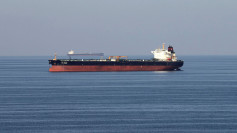
Norway has seized a Russian research vessel near the Arctic archipelago of Svalbard to help enforce a $4.22 billion compensation award obtained by Ukraine's state energy company Naftogaz, opening another front in an escalating confrontation between Moscow and European governments over Russian assets, sanctions and alleged hybrid attacks.
The Professor Molchanov was seized off Svalbard in connection with Naftogaz's claim over assets taken following Russia's 2014 annexation of Crimea, Reuters reported. The action comes as European countries increasingly turn to financial, legal and maritime measures against Moscow while Russia warns that seizures of its vessels could trigger retaliation.
Russia quickly condemned Norway's move. State news agency TASS quoted a Russian Foreign Ministry spokesperson describing the seizure as "piracy."
Norwegian authorities said the governor of Svalbard "will take care of the crew and passengers on board the vessel in collaboration with Trust Arktikugol." The seizure is intended to enforce the multibillion-dollar compensation claim rather than being presented as a confiscation tied directly to sanctions enforcement.
The episode nevertheless adds to a series of maritime confrontations involving Russian-linked vessels. In June, the French Navy, supported by the U.K., intercepted an oil tanker under international sanctions that was heading toward Russia.
French President Emmanuel Macron defended that operation as part of Europe's effort to prevent sanctions evasion and restrict financing available to Moscow during the war in Ukraine.
"It is unacceptable that boats skirt international sanctions, violate the law of the sea and finance the war that Russia has been waging for more than 4 years against Ukraine," Macron said at the time.
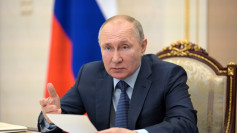
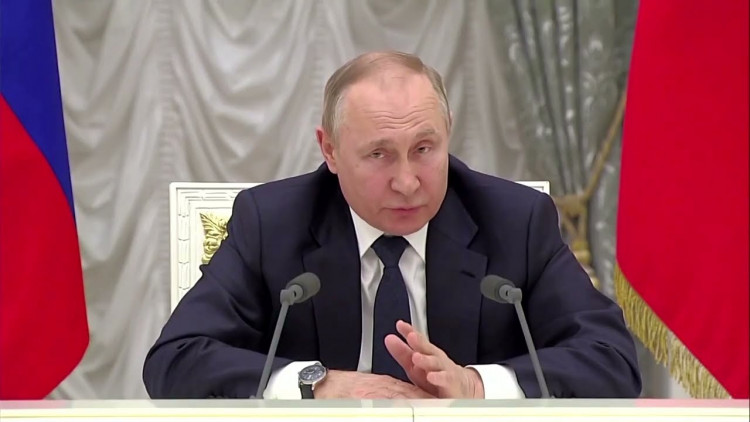
Russian President Vladimir Putin responded sharply to those seizures, calling them "nothing but piracy and robbery" and warning that Moscow could retaliate against similar actions.
"If this is done, we will be forced to respond in kind," Putin said.
Putin also suggested Russia wouldn't necessarily confine its response to the waters where a Russian vessel had been detained. Moscow could act in "any area where we see it as necessary and appropriate," he said, widening the potential geographic scope of any retaliation.
The Norwegian seizure comes amid a separate deterioration in relations between Russia and Germany. Moscow has moved to shut cultural centers associated with Germany's Goethe-Institut in several Russian cities after Berlin blamed Russia for an attempted drone attack at Leipzig Airport and responded with diplomatic measures.
Russian Foreign Minister Sergei Lavrov defended Moscow's response, saying anything less would demonstrate a lack of "self-respect." He said the closures would effectively bring Berlin's "cultural presence in Russia" to an end.
Germany has said the attempted attack at Leipzig Airport in early August "fits the established pattern of Russian hybrid operations in Europe." Berlin's accusation has drawn support from senior European officials and added urgency to discussions over how governments should respond to suspected Russian sabotage and other covert activity.
European Commission President Ursula von der Leyen said she spoke with German Chancellor Friedrich Merz and "assured him that the EU stands in full solidarity with Germany in the face of this attack by Russia."
European ministers discussed possible responses Wednesday but didn't agree on a single approach. Measures under consideration included additional sanctions, tighter visa restrictions and the closure of Russian consulates.
"It is clear that it has all the hallmarks of state-sponsored terrorism. The question is: what do we do about this," European Union foreign-policy chief Kaja Kallas told reporters.