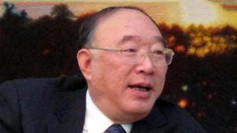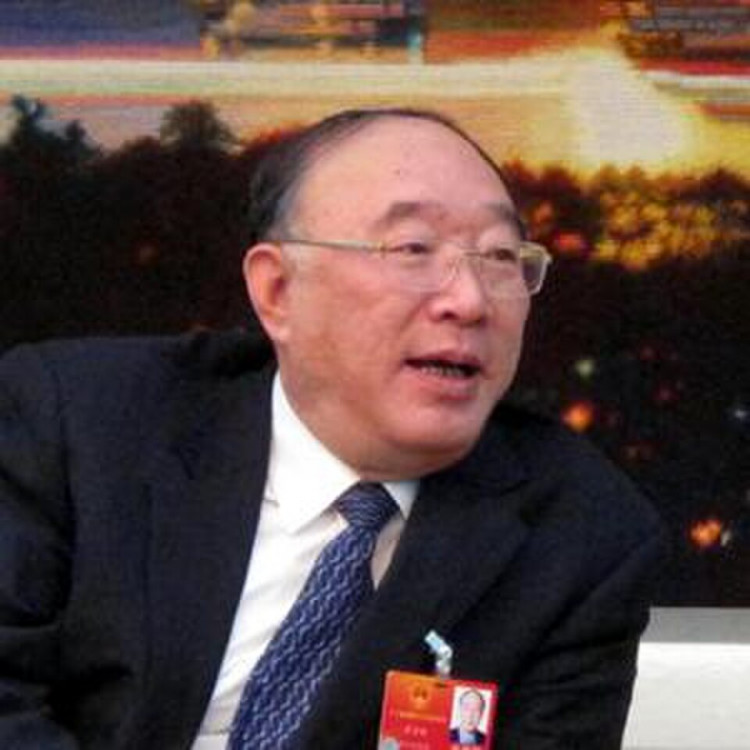
China's anti-corruption authorities have opened an investigation into former Chongqing Mayor Huang Qifan, a prominent economic policymaker who retained his position after the downfall of his onetime political patron, Bo Xilai.
Huang, 74, is suspected of "serious disciplinary and legal violations," Xinhua reported Tuesday. The Central Commission for Discipline Inspection and National Commission of Supervision are conducting the inquiry, according to an official statement also carried by the Global Times.
Authorities disclosed no specific allegations or transactions under examination. Huang could not be reached for comment, and it was unclear whether he had been allowed to retain a lawyer.
The announcement followed his cancellation of a scheduled appearance at a Hangzhou forum late last month. His absence prompted rumors that he had been arrested, although Tuesday's statement confirmed an investigation rather than providing details about his custody status.
Huang's case draws attention partly because he remained politically intact through successive scandals involving Chongqing's leadership. He served as mayor from 2010 to 2016 and continued managing the southwestern municipality's economy after Bo was removed in 2012.
Another former Chongqing party secretary, Sun Zhengcai, fell from power in 2017. Both men subsequently received life sentences, while investigations also swept up several vice mayors and officials in the city's public-security apparatus.
Huang had openly emphasized his closeness to Bo, describing their relationship in 2010 as being "like fish and water." After Bo's removal, however, he distanced himself from his former superior and criticized policies associated with him.
In 2013, Huang said Bo's legacy had been "banished" and denounced "vanity projects" that "tired the people and drained money." Bo was sentenced that year for corruption and abuse of power following a scandal in which his wife, Gu Kailai, was convicted of murdering British businessman Neil Heywood.
Huang's continued tenure distinguished him from other officials caught in the political fallout. He remained associated with Chongqing's industrial expansion and developed a reputation for detailed knowledge of banking, property markets, public finance and manufacturing.
After leaving the mayoralty in December 2016, he became vice chairman of the National People's Congress Financial and Economic Affairs Committee in February 2017. His appointment to Chongqing's municipal political advisory body the following January was viewed as signaling limited prospects for further advancement.
His public influence nevertheless continued. Huang became a frequent speaker at economic forums and published commentary on industrial development, technology and financial policy, attracting attention for his command of economic data.
Often described by Chinese media as a "financial mayor," he warned against excessive property speculation and borrowing. He also advocated stronger legal enforcement and investor protections alongside changes to capital markets.
Huang's subsequent positions included academic adviser to the China Finance 40 Forum and executive vice chairman of the academic committee of the China Institute for Innovation and Development Strategy. He also previously served as a vice chairman of the China Center for International Economic Exchanges.
Caixin reported earlier this year that the latter think tank had raised funds partly through research commissioned by local governments and consulting services, a practice that displeased Beijing. The official announcement of Huang's investigation did not identify any connection between that reporting and the inquiry.