The United States expended more than 1,000 Tomahawk cruise missiles and large quantities of Patriot and THAAD interceptors during its 39-day military campaign against Iran, creating what defense analysts describe as a temporary vulnerability that could take years to close as Washington races to rebuild critical stockpiles.
New assessments from the Center for Strategic and International Studies (CSIS) have intensified debate inside defense circles over the long-term consequences of Operation Epic Fury, the U.S. air and missile campaign against Iran. While analysts say the U.S. military retains sufficient firepower to respond to immediate threats, they warn that the pace of replenishment may lag behind growing security challenges in the Indo-Pacific, particularly as tensions with China remain elevated.
The concern is less about the outcome of the Iran conflict than the cost of sustaining it. According to CSIS analyses published in April and May, the campaign consumed munitions at a rate that far exceeded current industrial production capacity.
Among the weapons highlighted by researchers:
- More than 1,000 Tomahawk cruise missiles fired
- More than 1,000 Joint Air-to-Surface Standoff Missiles (JASSMs) used
- Between 190 and 290 THAAD interceptors expended
- More than 1,000 Patriot-family interceptors launched during operations
The Tomahawk inventory has become a particular focus because of the gap between wartime demand and peacetime production. Raytheon currently manufactures fewer than 200 Tomahawks annually, according to the CSIS report. At that pace, restoring inventories to pre-war levels could take several years.
Defense manufacturers are attempting to accelerate output. RTX, Raytheon's parent company, has announced investments in facilities across Alabama and Arizona and has stated its goal is to eventually increase annual production capacity beyond 1,000 missiles. The company declined to comment specifically on the CSIS findings, telling the Associated Press it had not yet reviewed the report.
Air-defense systems face similar pressures. CSIS estimates rebuilding THAAD inventories may extend to late 2029, while replenishing Patriot-related interceptor stocks could require a comparable timeline. The costs involved are substantial, with individual THAAD interceptors estimated at roughly $15.5 million each.
Analysts argue that today's shortages are rooted in assumptions made after the Cold War. Following the collapse of the Soviet Union, U.S. defense planners generally expected future conflicts to be shorter and more limited, reducing the need for large stockpiles of precision-guided weapons. Procurement decisions and industrial capacity were built around those expectations.
Mark Cancian, a retired Marine colonel and senior adviser at CSIS who co-authored the report alongside research associate Chris H. Park, said those assumptions began changing after Russia's invasion of Ukraine exposed the enormous ammunition demands of modern warfare.
"The thinking started to change, but it just takes time to build inventories," Cancian told the Associated Press. "Part of the challenge is bringing up to speed a complicated web of supply chains and subcontractors that produce very novel components."
Cancian also pushed back against suggestions that the rebuilding effort began only under the current administration.
"President Biden's administration should get some credit for starting conversations with the defence industry, putting money into the industrial base and ramping up production," he said. "A lot of people in the Trump administration are inclined to say that everything was terrible until they arrived, and that's not true. Now, it is true that the Trump administration really increased funding."
The Trump administration's proposed fiscal 2027 defense budget seeks approximately $1.5 trillion in spending and includes significant funding increases for munitions procurement. Lockheed Martin has separately announced plans to invest $9 billion through 2030 to expand manufacturing capacity for Patriot and THAAD systems.
The broader strategic concern identified by CSIS centers on China. The think tank warned that depleted inventories have created "a window of vulnerability for a potential Western Pacific conflict," adding that "The time needed to rebuild those inventories has thus become a major concern."
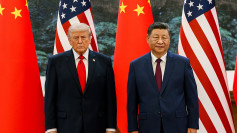
Chinese leaders have repeatedly emphasized Taiwan as a core national priority, and President Xi Jinping recently warned that mismanagement of Taiwan-related tensions could trigger direct confrontation between Beijing and Washington. Defense planners increasingly view stockpile levels as a critical component of deterrence in that environment.
CSIS noted one factor that may help preserve stability during the rebuilding period. Referring to China's military record, the report stated: "That difference in experience may preserve deterrence until munitions inventories are restored."