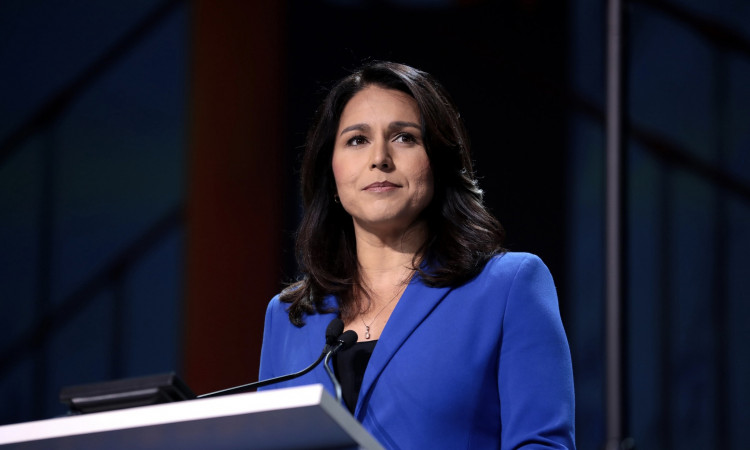
Director of National Intelligence Tulsi Gabbard said the Trump administration is preparing to release intelligence related to more than 120 overseas biological research facilities that received U.S. government funding, including more than 40 laboratories and health sites in Ukraine, opening a new front in the administration's broader review of gain-of-function research and federal bioscience spending.
The disclosure, announced as part of an ongoing White House investigation, marks one of the most expansive examinations yet of U.S.-supported biological research programs operating outside the country. Administration officials said the review is focused on identifying where taxpayer-funded facilities are located, what pathogens are housed there and whether any research activities involved experiments designed to alter viral characteristics.
According to representatives from Gabbard's office, preliminary intelligence searches identified funding connections to more than 120 biolaboratories spread across over 30 countries. Officials said the Office of the Director of National Intelligence is continuing to work with federal agencies to determine the scope of research conducted at the facilities.
The review follows President Donald Trump's executive order issued on May 5, 2025, restricting federal support for gain-of-function research without enhanced oversight requirements. The order directed agencies to examine funding streams associated with biological research involving pathogens that could potentially become more transmissible, virulent or dangerous.
Gabbard argued that the administration's inquiry is intended to bring greater transparency to overseas research programs that have received U.S. support over the past two decades.
"Politicians and entities within Biden's national security team lied to the American people about the existence of these US-funded and supported biolabs," Gabbard said, according to the report. She added that officials are seeking to identify pathogens present at the facilities and determine the nature of research conducted there.
Particular attention has focused on Ukraine, where administration officials said more than 40 facilities have been identified. The issue has remained politically sensitive since Russia raised allegations at the United Nations Security Council in March 2022 regarding U.S.-backed biological laboratories in Ukraine.
At the time, U.S. officials, the World Health Organization and major news organizations rejected claims that Ukraine housed American-operated biological weapons programs. However, U.S. government agencies acknowledged that Washington had funded public health, disease surveillance and laboratory modernization efforts in Ukraine for years.
According to information cited in the report, the U.S. Department of Defense stated in 2022 that approximately $200 million had been invested since 2005 in support of 46 Ukrainian laboratories, diagnostic facilities and related health infrastructure projects. Those programs were described as efforts to strengthen disease detection and biological threat monitoring capabilities.
Administration officials now say the current review extends beyond Ukraine and encompasses facilities across multiple continents. Intelligence analysts are reportedly examining research partnerships, pathogen inventories and ongoing clinical programs connected to federally funded laboratories.
The investigation remains ongoing, and officials have not yet released the underlying intelligence documents or specified how many of the facilities are currently operational. Nor have they publicly identified which laboratories, if any, are believed to have conducted gain-of-function experiments under U.S. funding arrangements.