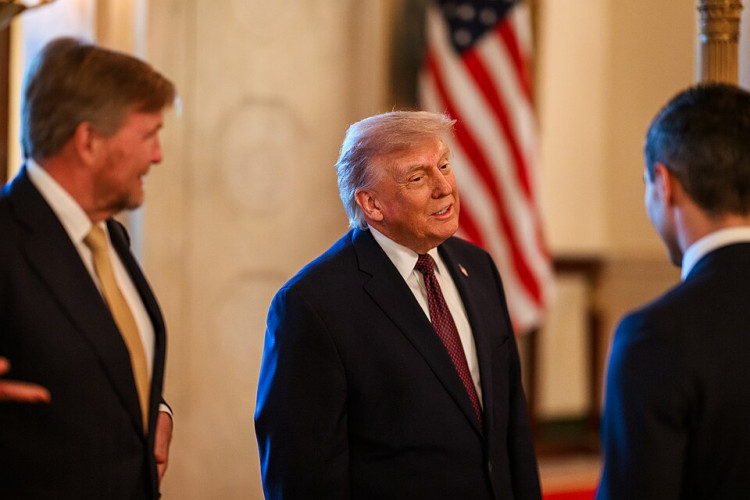
The Trump administration has permanently ended beneficial-ownership reporting requirements for U.S. companies and ordered the deletion of ownership information already submitted by American filers, dismantling a central provision of the Corporate Transparency Act that was designed to expose the people behind anonymous shell companies.
The Treasury Department's Financial Crimes Enforcement Network, or FinCEN, finalized the rollback Tuesday, turning an exemption introduced last year into permanent policy. Domestic companies and U.S. persons will no longer be required to disclose their beneficial owners to the federal government, while foreign companies operating in the U.S. will remain subject to narrower reporting requirements.
The decision represents a significant reversal of the Corporate Transparency Act, which Congress enacted in 2021 as part of a defense spending package. The law required most corporations and limited-liability companies to identify individuals who owned at least 25% of the entity or exercised substantial control over it.
The information-including names, dates of birth and identifying details-was collected in a secure FinCEN database rather than made available to the public. Law-enforcement agencies could access the records for authorized investigations, while financial institutions could obtain information under more limited circumstances for due-diligence purposes.
Treasury Secretary Scott Bessent cast the rollback as part of the administration's broader deregulation campaign and said eliminating the requirements would relieve millions of businesses of unnecessary compliance costs.
"Today's action is a victory for common sense and American small businesses," Bessent said, adding that the administration was "eliminating a burdensome reporting requirement for millions of law-abiding business owners without compromising our national security".
FinCEN had already stopped enforcing the requirement against domestic companies in March 2025 and subsequently issued an interim rule exempting them. The final rule makes that policy permanent and also exempts U.S. persons who help foreign entities register to do business in the country.
More unusually, the government isn't simply stopping future collection. FinCEN has been directed to delete previously submitted records that it reasonably determines belong to U.S. persons, using identifying information such as American passports or driver's licenses.
The National Federation of Independent Business, which sued in 2024 to block implementation of the Corporate Transparency Act, welcomed the decision. The small-business organization has argued that the disclosure system imposed an intrusive and costly federal mandate and has continued to urge Congress to repeal the underlying statute.
Republicans have increasingly targeted the law as an example of regulatory overreach. In April, the House Financial Services Committee voted 26-25 to advance legislation titled the Repealing Big Brother Overreach Act, which would eliminate the Corporate Transparency Act itself.
The rollback, however, has drawn sharp opposition from lawmakers, former officials and anti-corruption advocates who say anonymous American companies have historically provided an attractive mechanism for hiding illicit money. Drug-trafficking organizations, sanctions evaders, corrupt officials and financial fraudsters have all used opaque corporate structures to obscure the people ultimately controlling assets.
Sen. Elizabeth Warren criticized Treasury's action as a "gift to cartels, criminals and US adversaries that exploit shell companies to move millions through our financial system". The Massachusetts Democrat has called on Bessent to reverse the decision and appear before the Senate Banking Committee.
Tom Malinowski, a former Democratic congressman who helped write the legislation, focused particularly on the decision to destroy information the government has already collected. He called deletion of the existing records "utterly crazy".
The political reversal is especially notable because some senior members of the Trump administration once championed the same transparency framework. Secretary of State Marco Rubio supported the legislation while serving in the Senate.
In December 2020, Rubio described the Corporate Transparency Act as "the most significant anti-corruption & money laundering law in decades", praising its requirement that anonymous shell companies disclose their true owners.