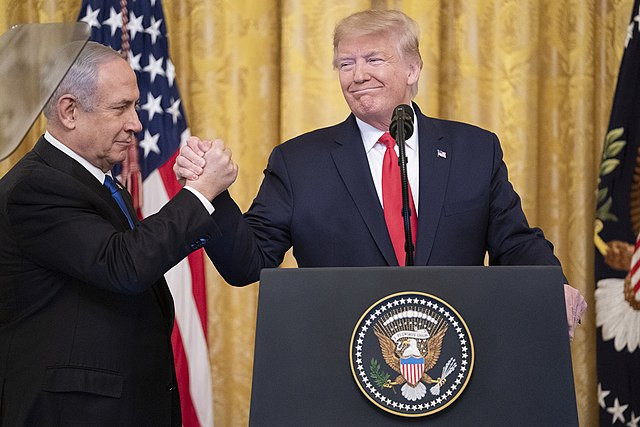
A classified U.S. intelligence assessment has reportedly warned that Israeli Prime Minister Benjamin Netanyahu may take actions that could jeopardize President Donald Trump's newly signed peace framework with Iran, exposing growing tensions between Washington and Jerusalem as negotiations enter a critical phase.
The assessment, first reported by The Washington Post, concludes that Netanyahu is "likely" to pursue policies that could undermine the agreement reached between the United States and Iran earlier this month. According to current and former U.S. officials familiar with the document, Israeli domestic politics and the future of military operations in Lebanon are central to the intelligence community's concerns.
The report emerges only days after Trump signed a 14-point memorandum of understanding with Tehran during the G7 summit in Versailles. The agreement calls for a halt to military operations across multiple fronts, including Lebanon, and seeks to establish a pathway toward broader regional stability and renewed nuclear negotiations.
According to officials cited by The Washington Post, intelligence analysts believe Netanyahu's political standing ahead of Israel's expected autumn elections is closely tied to maintaining a hard-line security posture against Hezbollah. The assessment reportedly argues that withdrawing Israeli forces from southern Lebanon could carry significant political risks for the prime minister at a time when security remains a dominant issue among Israeli voters.
Neither the U.S. intelligence community nor the White House has publicly released the classified document. The reporting relies on anonymous officials who described its contents because of the assessment's sensitive nature.
The dispute appears to center on one of the most consequential provisions of the Trump-Iran agreement. The memorandum reportedly calls for the "immediate and permanent termination of military operations on all fronts, including in Lebanon," while emphasizing respect for Lebanese sovereignty.
Israel was not a formal participant in the negotiations that produced the agreement. Although Trump has stated that Netanyahu received a copy of the document before it was signed, Israeli officials have continued to emphasize that national security considerations will dictate military decisions.
Netanyahu reinforced that position during a public appearance this week.
Restoring "security and prosperity to northern towns" requires "maintaining the security zone in southern Lebanon; it requires that we not leave there, as long as Israel's security needs require it," Netanyahu said.
Fighting between Israel and Hezbollah has continued despite diplomatic efforts to stabilize the region. Reports from Lebanon indicated additional casualties from Israeli military operations, while Israeli officials confirmed losses among their own forces during recent clashes.
Iran has also publicly linked the future of the agreement to developments in Lebanon. Iranian Foreign Minister Abbas Araghchi stated that "without the withdrawal of Israeli forces from the territories they occupied during this war, the war has not fully come to an end."
The intelligence assessment reportedly reflects concerns that Lebanon could become the most immediate test of whether the broader agreement survives beyond its initial implementation phase. While U.S. officials have portrayed the memorandum as a framework capable of reducing regional tensions, Israeli leaders continue to argue that military pressure on Hezbollah remains essential.
Analysts cited in The Washington Post noted that public opinion inside Israel remains strongly supportive of aggressive action against Hezbollah. The newspaper referenced research from the Institute for National Security Studies showing substantial support among Jewish Israelis for intensifying operations against the group.
The stakes extend beyond the battlefield. The agreement signed by Trump is intended to reopen the Strait of Hormuz fully, restore confidence in global energy markets and create a foundation for additional diplomatic engagement with Tehran. Any significant deterioration in the Lebanon situation could complicate those objectives and place additional pressure on an already fragile ceasefire framework.
Trump himself has acknowledged the uncertainty surrounding the arrangement. Speaking during the G7 summit, the president warned that if Iran failed to comply with the agreement, "we'll go right back to dropping bombs."