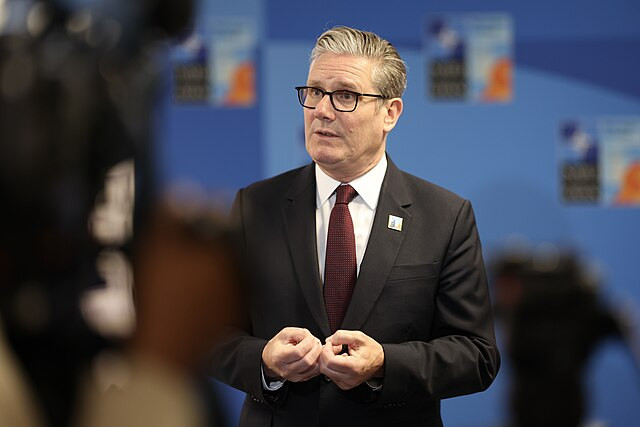
British Prime Minister Keir Starmer announced Monday that he will step down as leader of the Labour Party and resign as prime minister, triggering a leadership contest that is expected to elevate Andy Burnham to the forefront of British politics. The decision comes just two years after Labour's sweeping election victory and follows months of growing unrest within the party's parliamentary ranks.
Speaking outside 10 Downing Street, Starmer acknowledged the mounting pressure from Labour lawmakers and said he had concluded that the party needed new leadership ahead of the next general election.
"The question my party is asking now is whether I am best placed to lead us into the next general election," Starmer told supporters. "I have heard the answer of my parliamentary party to that question, and I accept that answer with good grace."
He added that "every decision I have taken has been about putting the country I love first," and said that commitment was "why I will resign."
The announcement marks another dramatic chapter in Britain's post-Brexit political instability. Since the United Kingdom formally left the European Union, the country has cycled through a succession of leaders, with Starmer's departure set to make him the seventh prime minister in a decade.
Attention quickly shifted to Burnham, who confirmed he would seek Labour's leadership only hours after Starmer's announcement. Leadership nominations are scheduled to open on July 9 and close one week later as Parliament begins its summer recess.
In a statement, Burnham sought to emphasize stability during the transition process.
"This marks the beginning of a transition and it is important that this process is conducted in an orderly and responsible way," Burnham said. "I will put myself forward as part of this process."
Burnham enters the race with considerable momentum. Long known as the "King of the North," the former Greater Manchester mayor recently returned to Parliament after winning a special election victory that drew national attention. His success came at a time when Labour has been battling growing challenges from Reform UK, which has posted strong gains in regional and local contests.
Following that victory, Burnham framed his campaign in broader national terms.
"We have an opportunity to turn the tide, to make the country feel like it's working again, to make people see that politics can make a positive difference, to make people feel hope again," he said after winning the parliamentary seat.
The leadership race may be less contentious than initially expected. According to NBC News, former Health Secretary Wes Streeting, who had been viewed as a potential contender, announced his support for Burnham's candidacy.
Streeting said Burnham could "win the fight of our lives against the forces of nationalism," signaling an effort among Labour moderates to quickly unite behind a single successor.