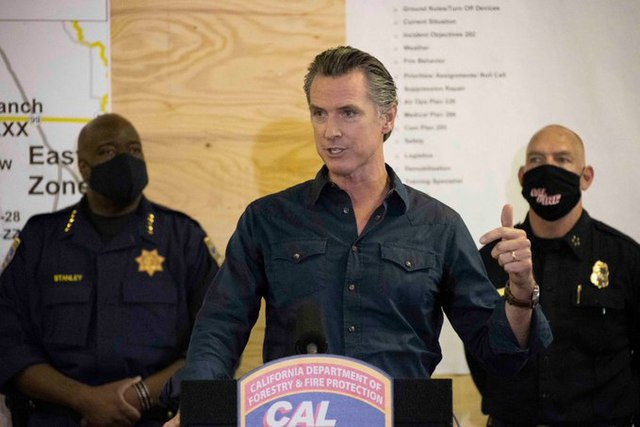
California Governor Gavin Newsom has ignited a new political fight over wealth taxation after proposing a federal tax on America's wealthiest households while simultaneously opposing a California ballot measure that would impose a one-time levy on billionaires. The contrasting positions, announced within days of each other, have drawn criticism from progressive allies who accuse the Democratic governor of sending conflicting messages as speculation grows about a potential 2028 presidential campaign.
Newsom outlined his national proposal in a Substack essay published on June 26 titled "It's time for a national billionaires' tax and a new social compact." The post appeared one day after California officials certified a statewide billionaire tax initiative for the November ballot despite the governor's opposition.
In his proposal, Newsom called for a federal minimum tax on individuals with net worth exceeding $100 million. He argued that the nation's tax code should ensure that the wealthiest Americans pay at least the same effective tax rate as ordinary workers, while also advocating broader reforms targeting inherited wealth and corporate taxation.
The governor also proposed eliminating what he described as the "tax-free lifestyle loan," tightening inheritance tax rules and restoring corporate tax rates that existed before the 2017 federal tax overhaul. In addition, he called for creating a national public equity fund that would allow Americans to share in wealth generated by artificial intelligence.
Newsom framed the proposal as a response to widening economic inequality, warning that roughly $124 trillion is expected to transfer between generations over the next two decades. He argued that such a shift risks creating what he described as "a permanent American aristocracy of inherited wealth" unless policymakers intervene.
While advocating federal action, Newsom has taken the opposite position on California's billionaire tax initiative. The statewide proposal would impose a one-time 5% tax on the wealth of California residents whose net worth exceeded $1 billion as of Jan. 1, 2026.
Supporters of the initiative, led by the Service Employees International Union-United Healthcare Workers West, collected more than 870,000 signatures to qualify the measure for the statewide ballot. The campaign, known as Billionaire Tax Now, says the revenue would help finance healthcare services, public education and food assistance programs.
Newsom has pledged to vote against the initiative. In his Substack post, he argued that state-level wealth taxes face practical limitations because wealthy individuals can relocate to lower-tax states. "Wealth is movable, and it shops for the state with the lowest taxes," he wrote, contending that nationwide tax policy would be more effective than individual state efforts.
The governor also criticized the ballot initiative's spending structure, saying it dedicates most projected revenue to a single policy area rather than allowing lawmakers flexibility to address broader budget priorities such as housing, education, childcare and public safety. Newsom noted that he rejected an earlier proposal from supporters that would have replaced the ballot measure with a smaller legislative tax package.
His position quickly drew criticism from progressive organizations backing the California initiative.
Dave Regan, president of SEIU-UHW West, said Newsom "has made it perfectly clear that he is in lockstep with the 250 billionaires in California." Critics argued that announcing a national proposal immediately after opposing the state initiative allowed Newsom to embrace the rhetoric of taxing billionaires while distancing himself from an actual wealth tax before California voters.
Others questioned whether Newsom's federal proposal differs substantially from the California measure. David Sirota, editor-in-chief of The Lever, argued that the governor's plan focuses primarily on income taxation and closing tax loopholes rather than directly taxing accumulated wealth, a distinction many wealth-tax advocates consider significant because billionaires often derive much of their fortunes from unrealized asset appreciation rather than taxable income.
Economist Gabriel Zucman, a prominent advocate of wealth taxation, has argued that California's billionaires collectively control roughly $2.3 trillion in assets, making a one-time wealth levy financially feasible. Supporters contend that concerns about wealthy residents leaving the state have been overstated, while opponents continue to argue that high-net-worth taxpayers have greater flexibility to relocate than other residents.