President Donald Trump has sparked a fresh political confrontation after dismissing a bipartisan affordable housing bill as "a yawn" while urging lawmakers to focus instead on the SAVE America Act, a Republican-backed election proposal that would tighten voter registration requirements. The remarks triggered immediate criticism from Democratic lawmakers, who accused the president of sidelining housing affordability in favor of voting legislation as Congress heads toward the November midterm elections.
The dispute unfolded even as the housing legislation continued advancing through the legislative process. Although Trump canceled a planned signing ceremony last week, House Speaker Mike Johnson later confirmed that the measure had been transmitted to the White House and would become law within the constitutional deadline if the president neither signed nor vetoed it.
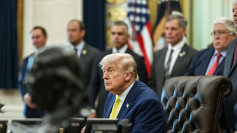
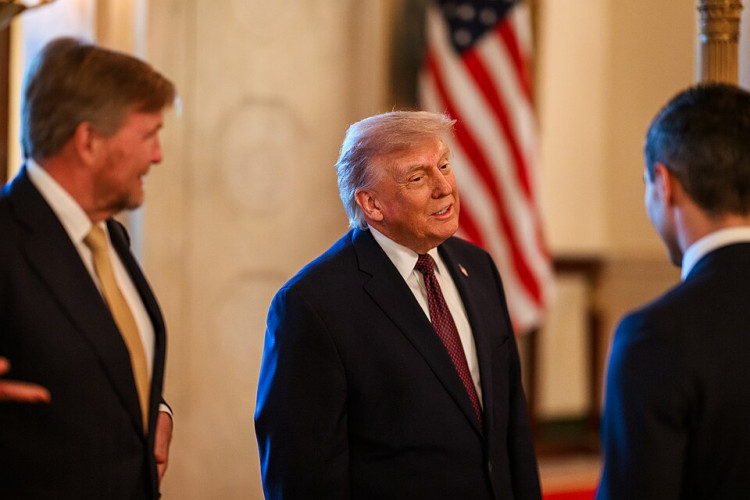
Speaking to reporters, Trump made clear where he believes Congress should concentrate its attention.
"It hasn't been sent to me yet. It's coming, I understand, and then I'll make a de, here's what I would like to say... It's a yawn. Some people say it's wonderful. To me, compared to the SAVE America Act, just about everything is a big yawn," Trump said.
His comments quickly became a rallying point for Democrats, who argued they reflected misplaced priorities as many Americans continue struggling with high housing costs.
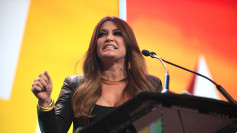
House Minority Whip Katherine Clark posted video of Trump's remarks on social media, writing that the president "truly doesn't give a damn about you." Representative Pramila Jayapal accused Trump of ignoring the nation's housing affordability challenges, while Representative Becca Balint argued the remarks demonstrated that the president "literally does not care about your cost of living, part one million."
Colorado Representative Brittany Pettersen also criticized the president's comments, writing: "A yawn? Try telling that to the families who can't afford rent, can't afford to buy gas or groceries, and are one paycheck away from losing everything. Believe him when he tells you who he is."
The Democratic National Committee echoed that message. Rapid response director Kendall Witmer said Trump's comments demonstrated that he continues prioritizing "his own interests and those of his wealthy friends" over working families confronting rising living expenses.
While Democrats centered their criticism on affordability, Trump and Republican leaders redirected attention toward election policy through the SAVE America Act.
The proposal would require:
- Proof of U.S. citizenship when registering to vote.
- Government-issued photo identification at polling places.
- Additional election integrity measures supported by Republican lawmakers.
Supporters argue the legislation would strengthen confidence in federal elections by preventing noncitizens from registering to vote. Critics contend the documentation requirements could create obstacles for eligible voters who lack ready access to birth certificates, passports or other qualifying records. The Bipartisan Policy Center has noted that such requirements could disproportionately affect married individuals whose names have changed, lower-income households and some elderly voters.
House Speaker Mike Johnson indicated Republicans continue exploring legislative options to advance the proposal, including attaching portions of the measure to budget reconciliation legislation that could bypass the Senate's traditional 60-vote threshold. Johnson also cautioned Republican lawmakers against delaying unrelated legislation as leverage, describing that approach as "self-defeating."
Republican leaders are also reportedly considering a multibillion-dollar federal grant program designed to encourage states to adopt provisions similar to those contained in the SAVE America Act. Meanwhile, several Republican-led states have already introduced or expanded comparable voter identification and citizenship verification requirements through state legislation.
The political debate intensified further following a closely divided Supreme Court decision involving election administration. In a 5-4 ruling, two conservative justices joined the Court's liberal members in rejecting a challenge brought by the Republican National Committee concerning mail ballots postmarked by Election Day but received afterward under state law.
Democratic National Committee Chair Ken Martin characterized the decision as a safeguard against what he described as efforts to undermine voting access, while Republicans have offered differing interpretations of the ruling and its implications for future election litigation.