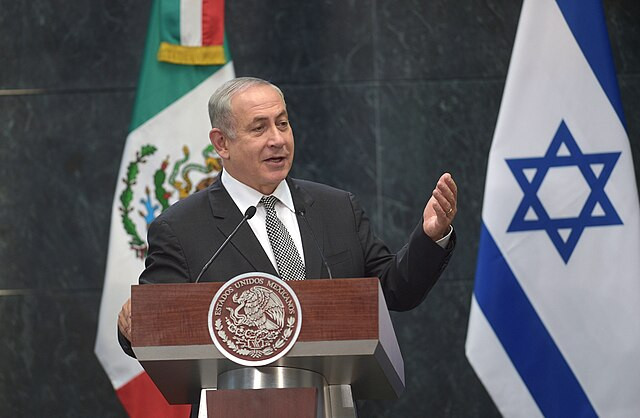
Israeli Prime Minister Benjamin Netanyahu has called for Israel to gradually end its dependence on U.S. military assistance, arguing that the country's economy has grown strong enough to finance its own defense needs without billions of dollars in annual American aid.
Speaking in an interview with Israel's Channel 14 on Tuesday, Netanyahu described U.S. military assistance as a form of "welfare" that Israel should eventually leave behind. His remarks come as Washington and Tel Aviv navigate differences over Iran policy and ahead of expected negotiations over a new long-term security assistance agreement once the current package expires in 2028.
The comments represent one of Netanyahu's clearest public endorsements yet of ending a funding arrangement that has formed a cornerstone of the U.S.-Israel security relationship for decades.
"I want to stop US aid. It is like welfare. I do not want it," Netanyahu said during the Channel 14 interview. When asked whether Israel should stop receiving American assistance altogether, he replied simply, "Yes."
Netanyahu proposed a gradual transition lasting roughly a decade rather than an immediate end to U.S. funding. He argued that Israel's expanding economy would eventually allow the country to finance its military entirely through domestic resources.
"US funding represents a small part of gross domestic product and Israel now has enough financial capacity to cover the amount entirely from its own resources," Netanyahu said, adding that he believes Israel's economy is approaching $1 trillion in size.
Independent economic estimates place Israel's gross domestic product substantially below that figure, at roughly $550 billion, though the country's economy has expanded considerably since the current U.S. assistance agreement was negotiated.
The existing military aid framework remains one of the largest bilateral defense assistance packages in American history.
Signed in September 2016 during the Obama administration, the Memorandum of Understanding commits the United States to providing $38 billion in military assistance over a ten-year period covering fiscal years 2019 through 2028.
According to the Congressional Research Service, the agreement includes:
- $33 billion in Foreign Military Financing grants.
- $5 billion for missile defense cooperation.
- Approximately $3.8 billion in annual U.S. military assistance.
The Congressional Research Service also notes that Israel has received approximately $174 billion in cumulative U.S. assistance since World War II, making it the largest overall recipient of American foreign aid during that period.
Although Netanyahu's latest remarks attracted significant attention, they are not entirely new.
The prime minister previously discussed reducing Israel's reliance on American military funding during an interview with CBS's 60 Minutes, saying, "I want to draw down to zero the American financial support, the financial component of the military cooperation that we have." He added that Israel receives approximately $3.8 billion annually and said it was time to gradually eliminate that dependence without waiting for future congressional action.
His renewed push comes as tensions persist between Israel and the Trump administration over diplomatic engagement with Iran.
Israeli officials have expressed frustration that U.S. negotiations with Tehran proceeded without fully incorporating Israel's strategic concerns. While Netanyahu has framed his proposal primarily as an issue of national self-reliance rather than a direct response to policy disagreements, the timing has drawn renewed attention to evolving dynamics between the two allies.
The proposal also raises practical questions about Israel's long-term defense spending.
Israel's 2026 defense budget totals roughly $49 billion, representing close to 7% of national GDP, according to analysis by the Foundation for Defense of Democracies. That level of military expenditure already exceeds the defense burden carried by NATO members as a share of economic output.
Defense analysts note that replacing $3.8 billion in annual American assistance would likely require either additional domestic spending or adjustments to procurement priorities, particularly for advanced U.S.-made weapons systems such as the F-35 fighter aircraft and aerial refueling platforms that have become central to Israel's military modernization.