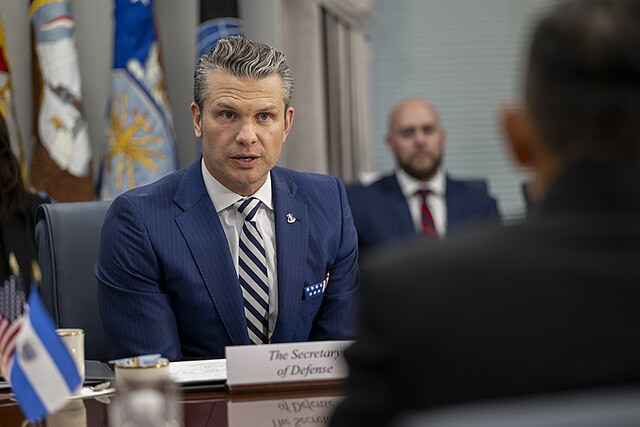
The U.S. Air Force has confirmed that 25-year-old recruit Keon Talik McDaniel died from influenza after falling ill during basic military training at Joint Base San Antonio-Lackland in Texas, placing renewed attention on Defense Secretary Pete Hegseth's decision earlier this year to end the military's longstanding mandatory seasonal flu vaccination policy.
The confirmation comes as lawmakers press the Pentagon to restore mandatory flu vaccinations across the armed forces following a growing outbreak at Lackland, one of the military's largest basic training installations. Congressman Joaquin Castro announced Tuesday that the Air Force had verified influenza as the cause of McDaniel's death after initially describing the incident only as a medical emergency.
The case has quickly become a focal point in a broader political and public health debate over vaccination requirements, military readiness and the balance between personal medical choice and force protection.
McDaniel became seriously ill during his sixth week of Air Force basic military training before being transferred to Brooke Army Medical Center, where he later died. The Air Force had not initially disclosed the specific illness responsible for his death, but Castro said military officials have now confirmed influenza was the cause.
The fatality occurred amid an expanding flu outbreak at Joint Base San Antonio-Lackland, where approximately 35,000 recruits complete Air Force basic training each year. Because recruits live, train and dine together in close quarters, infectious respiratory diseases can spread rapidly once introduced into the training environment.
According to Castro, the number of confirmed influenza cases among recruits continued climbing after military officials first acknowledged the outbreak in June.
The reported figures include:
- 160 confirmed influenza cases when the outbreak was first publicly disclosed on June 18.
- 284 reported infections by June 25, according to figures provided to Castro's office.
- Approximately 35,000 recruits graduate from Lackland annually.
The Air Force said it could neither confirm nor dispute the updated case count cited by the congressman's office.
The outbreak has revived scrutiny of Hegseth's April decision to make seasonal influenza vaccinations optional for active-duty troops, reservists and Defense Department civilian employees. Announcing the policy change, Hegseth argued the previous requirement was "irrational and absurd," saying service members should not be forced to choose between military service and personal medical decisions.
After influenza spread through the Lackland training population, however, the Pentagon reinstated mandatory flu vaccinations for recruits assigned to the installation. Defense officials said the decision reflected health risk assessments designed to limit transmission and protect military readiness during the outbreak.
The reversal has become a central argument for Democratic lawmakers seeking to restore mandatory influenza vaccinations across the armed forces.
Castro joined Representatives Chrissy Houlahan of Pennsylvania and Gilbert Cisneros of California in proposing an amendment to the National Defense Authorization Act that would reinstate compulsory seasonal flu vaccinations for all military personnel.
According to the lawmakers, Republican members prevented the proposal from advancing.
Speaking during a Capitol Hill press conference, Castro criticized the earlier policy change and questioned why Congress declined to support legislation restoring military-wide flu vaccine requirements following the outbreak.
Houlahan, an Air Force veteran who serves on the House Armed Services Committee, argued that military effectiveness depends on maintaining healthy personnel through evidence-based medical practices. Referring to the Lackland outbreak, she noted that nearly 300 recruits had reportedly contracted influenza, multiple trainees required hospitalization and one recruit had died.
Cisneros, who previously served as Under Secretary of Defense for Personnel and Readiness during the Biden administration, said vaccination requirements have historically been used to ensure troops remain medically prepared for service. He argued that widespread illness inevitably reduces military readiness and criticized decisions that depart from established public health guidance.
Medical experts have long viewed military training centers as environments particularly vulnerable to respiratory disease outbreaks because thousands of recruits share dormitories, classrooms, dining facilities and training exercises throughout intensive seven-and-a-half-week programs.
The Defense Department faced similar operational challenges during the COVID-19 pandemic, when the Air Force reorganized basic training with smaller cohorts and isolation protocols to reduce transmission while maintaining recruit production. The Pentagon also required COVID-19 vaccinations for service members beginning in 2021 before rescinding that mandate in 2023.
Since taking office, Hegseth has sought to reverse several military vaccination policies, including creating a pathway for former service members discharged over COVID-19 vaccine refusals to return with back pay and restored benefits.