President Donald Trump's physical health is facing renewed scrutiny after licensed clinical and forensic psychologist John Paul Garrison highlighted repeated movements in Trump's right arm during two recent White House appearances, describing them as "distinctly involuntary spasms" and raising the possibility of neurological causes. The observations, however, were based on video footage rather than a clinical examination and don't establish that Trump has suffered brain damage or has a neurodegenerative disorder.
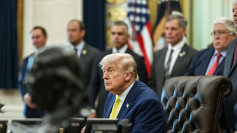
Garrison examined footage from an indoor round-table meeting with technology executives and a separate outdoor appearance on the White House grounds. In both instances, he focused on movements involving Trump's right hand or arm that he characterized as involuntary rather than deliberate gestures.
During the round-table event, Trump was standing away from the main lectern while listening to other participants when movement became visible in his right arm. Garrison said the apparent tremor became more noticeable as the meeting progressed and suggested that Trump appeared increasingly uncomfortable or restless.
Garrison also argued that the movements appeared more frequently when Trump was waiting for others to finish speaking. That observation formed part of his broader interpretation of the president's body language, although footage by itself can't determine whether a movement is neurological, behavioral or caused by another medical or nonmedical factor.
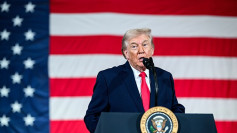
The psychologist then pointed to footage from an outdoor appearance near a helipad under construction at the White House. As Trump spoke to reporters and discussed flagpoles, Garrison identified another movement in the president's right hand, which he said made the earlier episode less likely to be an isolated occurrence.
"So, as you can see, President Trump seems to have a distinct spasm on one side," Garrison said in his video analysis. Referring to the two appearances together, he added: "What we're seeing is what appears to be distinctly involuntary spasms, particularly from the right side."
Garrison went further in discussing possible medical explanations, citing neurological disorders including Parkinson's disease, Alzheimer's disease and Lewy body dementia. He also raised the possibility that certain involuntary movements could occur following a stroke, while stopping short of saying that Trump has any of those conditions.
"This could also come with post-stroke behaviour," Garrison said. "There can be damage to certain areas of the brain that can cause this, but we are seeing something distinct, and it appears to be involuntary."
Those possibilities remain speculative without an examination, medical history and appropriate neurological testing. A clinician generally can't diagnose Parkinson's disease, dementia, a previous stroke or another neurological disorder simply by reviewing short recordings of a person at public events, and the source material provides no evidence that Garrison has examined or treated Trump.
Lewy body dementia, one of the conditions Garrison mentioned, is a progressive neurological disorder associated with abnormal protein deposits in the brain. Mayo Clinic medical guidance says the disease can involve cognitive changes, movement problems and disturbances affecting sleep and autonomic functions, but such symptoms can overlap with numerous other conditions and require medical evaluation.