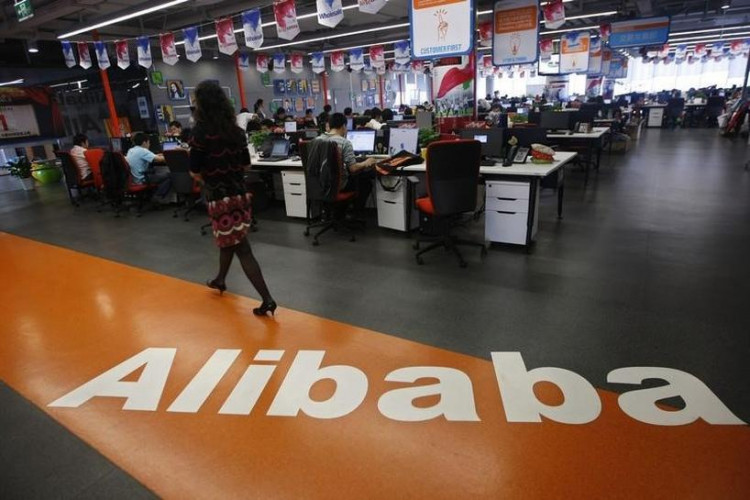
Alibaba Group raised HK$80 billion, equivalent to about $10.2 billion, through a major share placement to finance its accelerating artificial-intelligence push, sending its Hong Kong-listed shares sharply lower Monday as investors absorbed the dilution from 710 million new shares.
The Chinese technology giant priced the shares at HK$112.70 each, an 8.4% discount to Friday's closing price. The newly issued stock will represent about 3.6% of Alibaba's enlarged share capital, with the transaction expected to close Aug. 26.
Alibaba said it plans to direct the net proceeds toward its full-stack AI capabilities, including the expensive computing infrastructure needed to develop and operate increasingly sophisticated models. The financing gives the company another substantial pool of capital as China's largest technology groups race to build data centers, secure AI chips and attract customers to their cloud platforms.
The immediate market response was negative. Alibaba shares fell as much as 10.5% in Hong Kong following the announcement before recovering part of the decline, and were trading around HK$112.80 later Monday-almost exactly in line with the placement price.
The deal nonetheless attracted significant institutional demand. Reuters reported that investors submitted roughly $28 billion in orders, nearly three times the amount Alibaba sought to raise, with around $6 billion coming from long-only funds and sovereign investors.
Qatar Investment Authority, Norway's Norges wealth fund and Hillhouse were among the investors participating in the transaction, a person familiar with the offering told Reuters. The placement is the largest primary follow-on offering by a Hong Kong-listed company and the third-largest globally this year, behind transactions involving Alphabet and Intel, according to Reuters.
The fundraising highlights the capital intensity of Alibaba's AI strategy. The company's net profit fell 75% from a year earlier during the April-to-June quarter as investment in computing infrastructure and AI chips weighed on earnings.
Capital expenditures increased 75% to 67.68 billion yuan during the quarter, according to Reuters. Alibaba has already spent nearly half of the 380 billion yuan it previously committed to AI and cloud infrastructure over a three-year period, underscoring the speed at which the company is deploying capital.
Those investments are beginning to translate into faster growth in Alibaba's cloud operation. Revenue from AI Cloud and Compute Services climbed 45% from a year earlier to $7.1 billion in the June quarter, the business's fastest growth in 22 quarters, according to Alibaba.
AI-related product revenue, meanwhile, recorded triple-digit growth for a 12th consecutive quarter. Adjusted earnings from the cloud segment more than doubled to $830 million, offering investors evidence that the heavy spending is generating commercial demand even as it pressures companywide profitability.
Chief Executive Eddie Wu has told investors that Alibaba needs additional computing capacity to meet that demand. Wu expects the company's AI investments to reach break-even within roughly three years, with the period potentially shortening to about 2½ years as margins improve and Alibaba increases its reliance on internally developed chips rather than third-party hardware.
Alibaba also expanded its AI product portfolio Monday with the launch of Wan3.0, its latest video-generation model, Reuters reported. The model joins Alibaba's Qwen family of large language models as the company attempts to build an AI ecosystem spanning models, applications, cloud services and underlying computing infrastructure.
Senior Alibaba executives also put their own money into the stock following the placement. Chairman Joe Tsai purchased roughly HK$80 million of Alibaba's Hong Kong-listed shares, while Wu bought about HK$40 million, according to stock-exchange disclosures cited by Reuters.