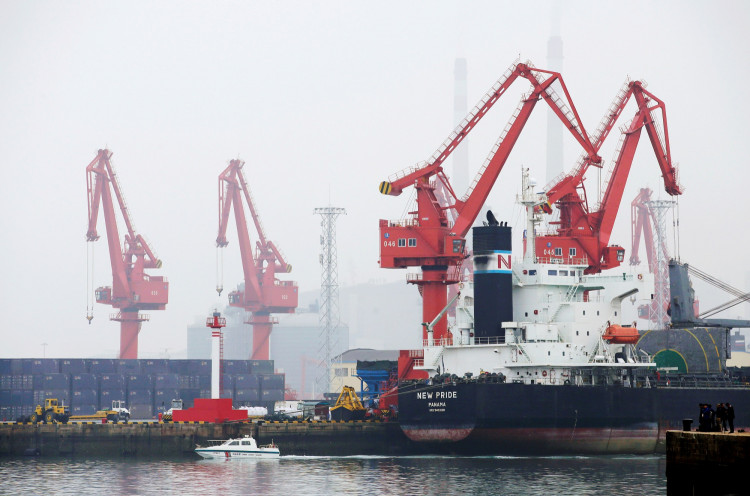
Saudi Arabia has resumed operations at its East-West oil pipeline less than two weeks after it sustained multiple attacks, potentially allowing crude exports from the Red Sea port of Yanbu to restart Tuesday. The development coincided with falling oil prices after Iran reportedly offered to reopen the Strait of Hormuz within seven days if Washington agreed to ease military pressure and lift its blockade of Iranian ports.
Reuters reported that Riyadh could resume shipments from Yanbu on Tuesday, marking a step toward restoring an export route that transports approximately 4% of global oil supplies. The pipeline's return comes as Saudi Arabia remains engaged in an armed conflict with Yemen's Iran-backed Houthi rebels, who have declared an embargo on Saudi oil shipments through the Red Sea.
The restart does not mean the pipeline has returned to full capacity. A report last week indicated that the operator was targeting a complete recovery in approximately six weeks, leaving uncertainty over how quickly Saudi Arabia can restore normal export volumes.
The East-West pipeline has become an important route for Saudi crude as the conflict disrupts maritime trade in the region. Its ability to transport oil to the Red Sea gives Riyadh an alternative export channel when shipments through the Strait of Hormuz face restrictions.
Oil markets also responded Tuesday to a separate Reuters report that Tehran had presented Washington with a proposal to reopen the Strait of Hormuz. Citing an unnamed senior Iranian official, Reuters said Iran conveyed the offer last week, making the reopening conditional on a reduction in U.S. military pressure and the removal of the blockade on Iranian ports.
"The U.S. needs to announce that it wants to resolve the issue diplomatically, make that official, and then agree on a timeline for how the process will move forward," the Iranian official told Reuters.
Under the reported proposal, Iran could reopen the waterway within seven days of reaching an agreement with the United States. The offer introduces a possible diplomatic route toward restoring shipping through one of the world's most important oil transit corridors, although no agreement has been announced.
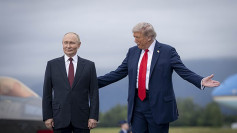
The diplomatic discussions come as President Donald Trump and Iranian President Masoud Pezeshkian prepare to attend the United Nations General Assembly in New York. Trump has said he would probably be willing to meet Pezeshkian, but the Iranian official indicated that no meeting between the two leaders is currently expected.
According to the official, Iran's delegation traveling to New York has full authority to conduct diplomatic negotiations. Trump is scheduled to address the General Assembly on Tuesday, providing another opportunity for the administration to outline its position on the conflict.
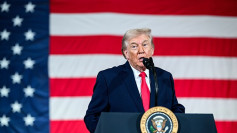
Despite the possibility of talks, Trump has continued to warn of further military action against Iran. He recently described himself as being in a "deciding mode" and suggested that "very big things" concerning the war could happen soon.
"My question is, if and when do I blow the entire nation up? They better behave," Trump said.
The administration is also preparing additional economic measures targeting Iran. Treasury Secretary Scott Bessent threatened to "shut down" Iranian airlines beginning Wednesday by imposing sanctions on countries and businesses that continue providing services to their aircraft.
"How do we do that? That if they land, you cannot provide them with fuel. You cannot provide them with landing services, you cannot sell them tickets, or you will be knocked out of the dollar system," Bessent said.
The proposed restrictions would extend U.S. economic pressure beyond Iranian airlines themselves to companies and countries facilitating their international operations. Bessent's warning comes as Washington continues to combine sanctions threats with the possibility of diplomatic engagement.
Iran's military has issued its own warning, claiming that intelligence indicates the United States is preparing another large-scale strike against the country. Iranian forces threatened "painful retaliation" across the region if such an attack takes place.