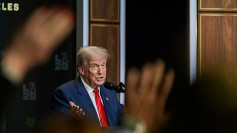
A new POLITICO survey shows rising living costs are reshaping the political landscape for President Donald Trump, with a sizable share of his 2024 supporters saying they feel financially worse off and increasingly attributing their struggle to the administration. The poll found 46% of Americans view today's cost of living as "the worst they can remember," while 37% of Trump voters agree - a warning signal for a White House that built its coalition on promises of economic relief.
The findings come from a national online survey of 2,098 adults conducted November 14-17. More than half of respondents said the Trump administration bears at least some responsibility for price pressures, suggesting that affordability is now eclipsing partisan loyalty for a segment of the president's own base.
POLITICO's broader analysis earlier this month identified a widening divide between "MAGA" Republicans and non-MAGA Trump voters, with the latter group far more likely to express frustration over household finances. The shift helps explain why Democrats outperformed expectations in several off-year contests, particularly in districts where economic anxiety was highest.
Individual voter reactions have reinforced that shift. In a much-circulated exchange, a Trump supporter confronted campaign surrogates about rising costs, saying she was "not happy" and encouraging the president to "please do something." Trump replied, "Beef we have to get down," and insisted prices were "way down." The clip made national headlines, amplifying perceptions of disconnect between official messaging and voter experience.
Economists point to multiple contributors behind the pressure on household budgets: tariff-driven price increases, elevated housing costs, and wage gains that have failed to keep pace for many working families. The Bureau of Labor Statistics has also flagged disruptions in federal data releases following this year's funding lapse, leaving policymakers and voters without routine monthly indicators.
Federal Reserve officials have continued to warn against premature assumptions that inflation is fully contained, even as markets speculate about another rate cut in December. For the Trump administration, that uncertainty challenges assertions that inflation is effectively under control, especially as polls show voters' lived experience diverging from national statistics.
Democrats capitalized on these conditions in 2025 races by making affordability the centerpiece of their campaigns. Analysts say that message resonated in districts where grocery, rent, and energy bills have become dominant concerns. Some Republican strategists privately argue the party must adjust its economic message to stem potential losses in 2026.
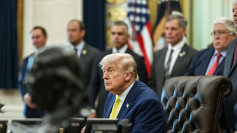
Trump has rejected the framing outright. At a recent Cabinet meeting, he dismissed Democrats' affordability warnings as a "fake narrative" and a "con job," adding, "they just say the word. It doesn't mean anything to anybody." The comments, widely broadcast, underscored the administration's reliance on macroeconomic indicators rather than voter-reported hardship.