(Photo: NASA/Goddard/SwRI/JHU-APL)
A new analysis of the interstellar object 3I/ATLAS has uncovered a series of unusual physical and orbital characteristics that are prompting scientists to re-evaluate what the fast-moving visitor actually is. The study, which compiles data from observatories and recent assessments by Harvard Professor Avi Loeb and other researchers, catalogues anomalies that distinguish 3I/ATLAS from any comet previously observed in the solar system. The accumulated evidence has intensified debate over the object's true origin as it continues its outbound trajectory.
Researchers first identified 3I/ATLAS in July 2025 through NASA's ATLAS survey in Chile, confirming quickly that its hyperbolic path indicated an interstellar origin. But subsequent observations have revealed deviations not typically associated with known celestial bodies. These include unexpected non-gravitational acceleration near its perihelion, a close approach to Jupiter projected for March 2026, unusual gas ratios, and a large estimated mass that dwarfs the two other interstellar visitors on record.
One of the most striking features is the object's predicted passage near Jupiter on March 16, 2026. Its closest approach is estimated at 53.445 million kilometers-almost identical to the planet's Hill radius of 53.502 million kilometers. Analysts note that such alignment is possible only because of a measurable acceleration detected near its closest point to the Sun. Scientists have recorded the measurement as one of the defining irregularities of the 3I/ATLAS dataset.
Other anomalies concern visibility and proximity. Despite passing within tens of millions of kilometers of Mars, Venus, and Jupiter during its journey, the object could not be observed from Earth during its perihelion window because of the Sun's glare, an uncommon circumstance for an object of its size. Its estimated mass-roughly one million times greater than 1I/'Oumuamua and one thousand times larger than 2I/Borisov-further distinguishes it. Astronomer Jason Wright noted in his AstroWright blog that 3I/ATLAS is also moving faster than either of its predecessors.
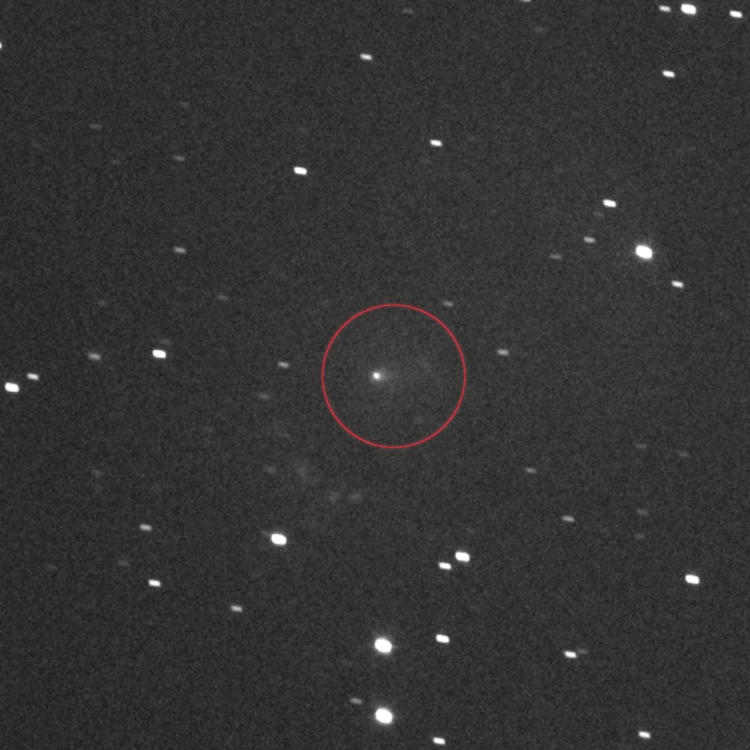
Observations by the HiRISE camera aboard the Mars Reconnaissance Orbiter show that 3I/ATLAS emitted a persistent jet pointing toward the Sun-an anti-tail-during July, August, and November 2025. Its gas cloud displays a nickel-to-iron ratio, and a nickel-to-cyanide ratio, that diverge sharply from thousands of documented comets, including 2I/Borisov. Spectroscopic data place these measurements outside normal ranges, raising further questions about the object's source environment.
Beyond these major anomalies, researchers have documented intermediate events that they consider statistically rare. The arrival direction of 3I/ATLAS lies within roughly nine degrees of the region associated with the historic "Wow! Signal," a coincidence noted in earlier observational datasets. Polarisation measurements show an "exceptionally negative degree of polarisation," a value without precedent among known interstellar comets.
Minor irregularities also appear in the object's recorded chemistry and activity level:
- The gas cloud is composed of roughly 4% water by mass, far below typical solar-system comets.
- Jets maintain orientation over distances of nearly one million kilometers.
- Sublimation alone cannot explain the required surface area for such activity.
- Non-gravitational acceleration occurred without signs of fragmentation in imaging sequences.
Documented through JPL Horizons data, HiRISE imagery, and spectroscopic analyses, these features form a catalogue of deviations that scientists are now sorting by significance. While none alone disqualifies 3I/ATLAS as a natural comet, taken together they depict an interstellar body with properties unlike anything studied to date.