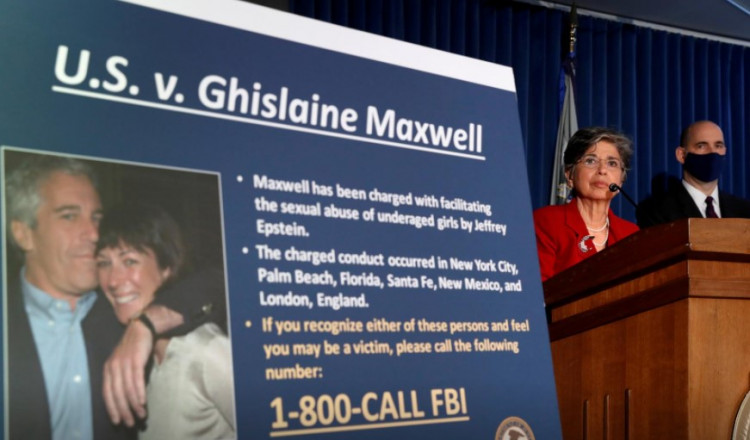
A federal judge in New York has ordered the release of grand jury transcripts and other sealed evidence from the criminal case against Ghislaine Maxwell, citing sweeping language in the newly enacted Epstein Files Transparency Act that overrides longstanding confidentiality rules in the U.S. justice system. The decision marks one of the most consequential disclosures to date involving the government's investigation of Jeffrey Epstein, the financier who died by suicide in 2019 while awaiting trial on federal child sex-trafficking charges.
U.S. District Judge Paul Engelmayer issued the order at the request of the Department of Justice, which sought permission to release documents held under seal. The act, passed nearly unanimously by Congress and signed into law on Nov. 19, directs the DOJ to disclose material related to Epstein and his associates and sets a deadline of Dec. 19 for the agency to make a broader set of records public. Maxwell, convicted in 2021 for procuring underage girls for Epstein, is serving a 20-year sentence.
The DOJ had previously failed in its bid to unseal grand jury records in Maxwell's case, with Engelmayer denying the request in August based on the traditional permanence of grand jury secrecy. But in his latest ruling, the judge said Congress's new statute fundamentally changes that framework. Although he noted that the Epstein files "Act does not explicitly refer to grand jury materials," he wrote that "The Court nonetheless holds - again in agreement with DOJ - that the Act textually covers the grand jury materials in this case."
Engelmayer pointed to the law's direct references to Maxwell and its directive to release files pertaining to her prosecution. He said Congress's "decision not to exclude grand jury materials despite knowledge as to their existence, while expressly excluding other categories of materials (such as classified information), indicates that the Act covers grand jury materials." The order also authorizes the release of transcripts, exhibits, and evidence exchanged between prosecutors and Maxwell's defense ahead of her 2021 trial.
The judge, however, sharply criticized the DOJ for failing twice to notify Epstein's and Maxwell's victims before seeking disclosure. "In its two rounds of applications to this Court to disclose records, DOJ, although paying lip service to Maxwell's and Epstein's victims, has not treated them with the solicitude they deserve," Engelmayer wrote. He added that when the DOJ applied on Nov. 24, "the Court ... were compelled again to direct DOJ forthwith to notify these victims of its latest motion, and to set a deadline for victims' submissions."
A mechanism will now accompany the disclosures to prevent unintended release of information that could identify victims or invade their privacy. Similar caution has been ordered elsewhere: on Dec. 5, U.S. District Judge Rodney Smith in Florida directed the release of grand jury materials from the earlier, abandoned federal investigation of Epstein conducted between 2005 and 2007.
The unsealing request arrives amid renewed tension between Epstein's victims and the DOJ. On Dec. 8, the department disputed accusations from a consortium of victims that it had improperly released personal identifying information, saying the information had already been public but pledging to redact names in future disclosures. Engelmayer also referenced additional confidentiality requests, including a letter from a "John Doe" asking that his identity be withheld because its release would effectively identify an Epstein victim, and a submission from lawyer Neil Binder seeking redactions for his clients.
The political dimension surrounding the transparency law continues to reshape the inquiry. High-profile associates of Epstein-including President Donald Trump, former President Bill Clinton, former Treasury Secretary Larry Summers, and Andrew Mountbatten Windsor-have long drawn public speculation, though Trump and others have denied wrongdoing.
During the 2024 campaign, Trump publicly supported releasing the files after first calling the matter a hoax. His DOJ later reversed course in July, asserting no further disclosure was needed after previously teasing a "truckload" of documents. The reversal triggered infighting within the Republican Party and contributed to the bipartisan push that ultimately produced the Epstein Files Transparency Act.