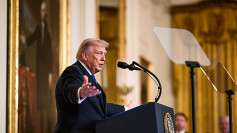
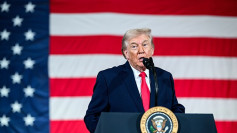
President Donald Trump defended his latest round of import taxes during an economic address in Pennsylvania, urging Americans to adjust their consumption habits as tariffs push up retail prices. Speaking at the Mount Airy Casino Resort, Trump told supporters that consumers have long benefited from artificially cheap foreign goods, particularly from China, and should expect to scale back purchases as part of his effort to rebuild U.S. manufacturing. "You can give up certain products. You can give up pencils," he said. "That's under the China policy, you know every child can get 37 pencils-they only need one or two, you know they don't need that many."
The remarks come as the administration's tariff strategy enters a politically sensitive phase ahead of the 2026 midterms. While Trump emphasized the need to protect domestic industry, especially steelmakers central to Pennsylvania's economy, he acknowledged the strain higher prices have placed on American households. Tariffs on components and finished goods have contributed to rising costs in multiple sectors, from basic consumer goods to manufacturing inputs.
Trump expanded his argument by broadening the analogy to household toys. "You don't need 37 dolls for your daughter, two or three is nice, but you don't need 37 dolls," he said, adding, "But you always need steel." The line underscored his pitch that modest consumer sacrifices are necessary to secure long-term industrial strength, even as inflation pressures remain a dominant election-year concern.
The White House has spent months battling criticism that tariffs amount to a hidden tax on consumers. Inflation in 2025 has persisted across groceries, fuel, and housing, eroding wage gains and elevating affordability to a central theme for Democrats. Trump dismissed those attacks as a partisan tactic-calling the affordability focus a "hoax"-but moments later allowed that prices had indeed climbed too high. "I can't say 'affordability hoax,' because I agree the prices were too high," he said, while insisting his trade strategy has begun reducing costs despite data showing many imports remain elevated.
Pennsylvania offered a symbolic and strategic backdrop for the speech. The state's industrial towns and steel corridor remain receptive to protectionist trade policies, and Trump used the venue to reinforce the message that manufacturing revival requires national buy-in. The shift in rhetoric-encouraging Americans to "give up" some consumer products-marks an evolution from previous arguments that tariffs would impose minimal impact on shoppers.
Critics argue the message risks alienating middle-class voters confronting rising living costs. Democratic officials and trade economists say Trump's remarks illustrate an acceptance of inflationary effects that disproportionately affect working families, especially those who rely on inexpensive imported goods for school supplies, household items, and clothing. They warn that advocating reduced consumption could be politically damaging in states where pocketbook issues dominate voter priorities.
The administration has attempted to cushion economic fallout in some sectors, particularly agriculture. A $12 billion emergency support package was recently announced to offset losses faced by farmers as China, Mexico, and other trading partners reduce purchases of U.S. crops in retaliation for the tariffs. The relief package aims to stabilize the rural vote as the trade dispute widens.