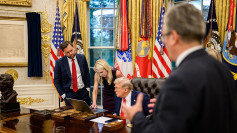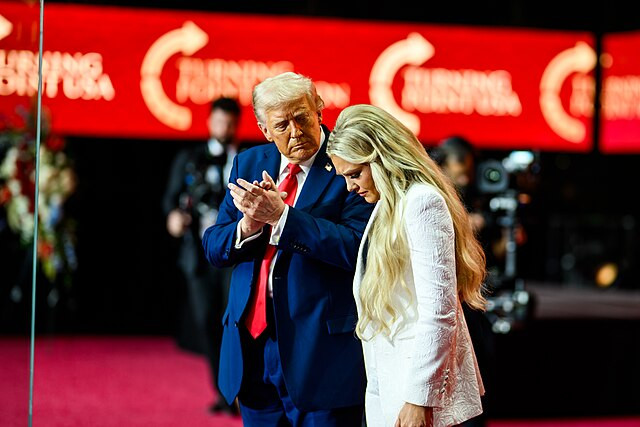
President Donald Trump has appointed conservative activist Erika Kirk to the Board of Visitors overseeing the United States Air Force Academy, placing the widow of Turning Point USA founder Charlie Kirk in a position that helps review the training, discipline and education of future U.S. Air Force officers.
The appointment, which appeared on the academy's official board membership list in early March, has ignited debate in Washington and among military observers about whether Kirk's background in political activism aligns with the responsibilities of a body that monitors one of the nation's most prominent military institutions.
The Board of Visitors at the United States Air Force Academy is a federally mandated advisory panel that examines the academy's academic programs, discipline and institutional culture. According to the official description of the board's authority, members are empowered to review the academy's "morale, discipline, curriculum, instruction, physical equipment, fiscal affairs, academic methods and other matters relating to the Academy."
Although the board does not manage the academy's operations, its findings are compiled into reports for the Secretary of the Air Force and the U.S. Congress and can influence debates over military education and leadership training.
Historically, the panel has included a mix of presidential and congressional appointees, often drawing from retired military officers, national security policymakers and lawmakers with experience overseeing the armed forces. Such appointments have long served as a way for presidents to shape the philosophical direction of service academies.
Trump has previously sought to reshape the oversight boards of U.S. military academies. In 2025 he removed several board members across the service academies, arguing they had promoted what he described as "woke leftist" ideology within military institutions.
Kirk's appointment also carries a personal dimension. She replaces her late husband, Charlie Kirk, the conservative commentator and founder of Turning Point USA, who was appointed to the same board by Trump in March 2025.
Charlie Kirk attended at least one board meeting before his death in September 2025 after he was assassinated while speaking at an event at Utah Valley University. Following his death, Erika Kirk became more prominent in conservative political circles.
Rep. August Pfluger, a Republican congressman from Texas who chairs the Air Force Academy Board of Visitors, publicly supported the decision.
"Erika is the right person to fill Charlie's place on the Board and continue his work of inspiring the next generation of service members and advancing the academy," Pfluger said.
Erika Kirk currently serves as chief executive and board chair of Turning Point USA, the conservative youth organization founded by her husband in 2012. The group expanded rapidly during Trump's presidency, establishing hundreds of chapters on college campuses and becoming a major platform for conservative student activism.
Turning Point USA organizes national political conferences and events promoting conservative ideas such as free markets, limited government and traditional social values. Since Charlie Kirk's death, Erika Kirk has taken a more visible role in the organization's leadership, appearing at political rallies and public events.
Supporters of the appointment argue that the Board of Visitors is intended to include civilian perspectives rather than solely military expertise. Presidents from both parties have historically appointed political allies, donors and public figures to advisory boards tied to service academies.
Advocates of the selection also point to Kirk's experience leading a large national organization that engages with college-age Americans, arguing that such experience provides insight into the values and concerns of younger generations who may eventually join the armed forces.
Critics, however, say the appointment reflects the growing politicization of institutions responsible for training future officers.
Unlike many previous members of the board, Kirk has no direct background in military service, defense policy or higher education administration. Her professional career has largely focused on political advocacy and organizational leadership within conservative activist networks.