Robert F. Kennedy Jr. is opening a new front in the Trump administration's healthcare agenda, launching a campaign against what he describes as the "overuse" of antidepressants and psychiatric medication while drawing sharp concern from psychiatrists who warn the rhetoric could deepen mistrust around mental healthcare in the United States.
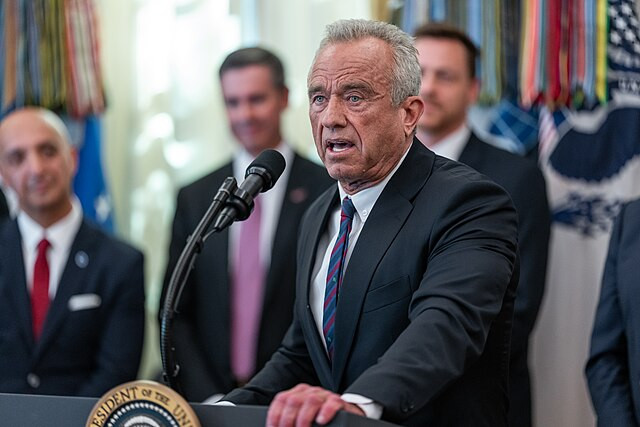
Speaking at a mental-health summit organized by the MAHA Institute, Kennedy framed the initiative as part of a broader effort to challenge what he called America's culture of "overmedicalisation," particularly among children and adolescents. The event placed antidepressants, selective serotonin reuptake inhibitors, or SSRIs, and other psychiatric drugs at the center of a widening debate over prescribing practices, informed consent and the role of pharmaceutical treatment in modern psychiatry.
"Today, we take clear and decisive action to confront our nation's mental health crisis by addressing the overuse of psychiatric medications, especially among children," Kennedy said in a statement released alongside the initiative.
Kennedy added that the Department of Health and Human Services would promote "patient autonomy," informed consent and alternative treatment approaches while encouraging closer examination of prescription trends across the healthcare system.
The administration's proposal does not seek to ban antidepressants or restrict access outright. Instead, according to a Dear Colleague Letter circulated by HHS, federal agencies will review prescribing patterns, evaluate long-term risks and encourage wider use of non-pharmaceutical interventions such as therapy, exercise, nutrition and family-centered treatment models.
Still, Kennedy's public messaging has unsettled many mental-health professionals because of his longstanding skepticism toward psychiatric medication.
Over recent years, Kennedy has repeatedly questioned antidepressants during interviews and public appearances, at times suggesting links between psychiatric drugs and violence, developmental complications during pregnancy and severe withdrawal effects. Those claims remain heavily disputed within mainstream medicine.
Federal regulators, including the U.S. Food and Drug Administration, continue to classify antidepressants as generally safe and effective when properly prescribed for conditions including depression, anxiety disorders and obsessive-compulsive disorder.
Psychiatrists acknowledge that the issue Kennedy is tapping into is not entirely fringe. Concerns about overprescribing, medication dependence and difficult withdrawal experiences have become increasingly common inside psychiatry itself, particularly surrounding long-term antidepressant use.
Joseph F. Goldberg, clinical professor of psychiatry at the Icahn School of Medicine at Mount Sinai, described deprescribing as a legitimate medical process rather than a political crusade.
"If any treatment is not proving itself to be beneficial, or if problems with tolerability substantially outweigh efficacy, it makes sense to discontinue that treatment and replace it with a more effective viable alternative," Goldberg said.
That distinction has become central to the backlash now forming around Kennedy's initiative. Critics argue that careful clinical review of psychiatric medication differs fundamentally from broad political attacks that risk stigmatizing treatment itself.
Jonathan Alpert of Montefiore Medical Center warned that the national conversation is being flattened into ideological extremes, despite the reality that both overprescribing and underprescribing can occur simultaneously.
Mental-health experts note that the United States continues to face severe structural shortages in psychiatric care even as antidepressant use remains widespread. Large numbers of Americans still struggle to access therapists, psychiatric evaluations or long-term counseling.
According to figures cited by experts responding to the administration's proposal, only about 40% of U.S. adults and adolescents with depression currently receive counseling or therapy. Suicide rates also climbed sharply between 2000 and 2018, adding urgency to concerns about untreated mental illness.
For many psychiatrists, those numbers complicate Kennedy's focus on medication overuse.
Theresa Miskimen Rivera said the broader framing around "overmedicalisation" risks oversimplifying a far more complicated healthcare crisis.
"This type of characterization really oversimplifies a very complex, larger issue," Rivera said.
Rivera pointed to chronic workforce shortages, inadequate psychiatric infrastructure, limited consultation time and barriers to psychotherapy as deeper systemic problems driving America's mental-health challenges.