Russia has intensified its rhetoric over Taiwan, warning that continued United States military support for the self-governing island could push the world toward a direct global conflict involving Washington, Beijing and Moscow, as tensions in the Indo-Pacific deepen alongside the expanding strategic partnership between Russia and China.
The warning, which circulated widely across social media and Russian-aligned commentary channels this week, comes as the Trump administration presses ahead with major arms support for Taiwan and Beijing continues military exercises near the island. The increasingly aggressive language has renewed concern among diplomats and security analysts that Taiwan is emerging as one of the most dangerous geopolitical flashpoints of 2026.
According to widely shared online posts and commentary attributed to Kremlin-linked messaging, Moscow warned that "U.S. support for Taiwan will have catastrophic consequences," language that social media users and commentators characterized as an implicit World War III threat.
While the exact wording of the viral claims has not appeared in a formal Kremlin decree, the rhetoric broadly aligns with repeated public warnings from Russian officials regarding Western military involvement near China's sphere of influence.
Sergey Lavrov has repeatedly argued that Western intervention in regional disputes risks broader escalation and destabilization of the international order. Russian officials have increasingly framed Taiwan not as a localized territorial dispute, but as part of a wider confrontation between Western alliances and authoritarian powers seeking to reshape global influence.
The warnings arrive as the United States dramatically expands military assistance to Taiwan.
In December 2025, the Trump administration announced what Reuters described as the largest U.S. arms package ever approved for Taiwan, valued at approximately $11.1 billion. The package included advanced rocket systems, drones and artillery platforms intended to strengthen Taiwan's deterrence capabilities amid growing Chinese military pressure.
Taiwan's government has simultaneously accelerated its own defense preparations.
Lawmakers in Taipei recently approved additional funding for U.S.-made weapons systems, reflecting mounting anxiety over Chinese naval and air-force operations around the island. Beijing continues to regard Taiwan as part of China under its "One China" framework and has repeatedly condemned foreign military support for the island as interference in internal affairs.
For Moscow, the Taiwan issue increasingly overlaps with its broader confrontation with the West over Ukraine, NATO expansion and global sanctions.
Since Russia's invasion of Ukraine in 2022, Beijing and Moscow have strengthened economic, diplomatic and military coordination. Analysts say the Kremlin's Taiwan rhetoric serves multiple purposes simultaneously: supporting China politically, discouraging deeper American military engagement in Asia and signaling that future regional conflicts may not remain geographically isolated.
The messaging also reflects growing fears inside Western capitals that simultaneous crises in Europe and Asia could stretch American military and diplomatic capacity.
Regional allies are already reacting.
Japan and Australia have expanded defense cooperation with Washington and accelerated military planning tied to potential Taiwan contingencies. European governments, meanwhile, are watching developments cautiously as they continue balancing commitments related to the war in Ukraine and broader Indo-Pacific security partnerships.
The Trump administration has attempted to project firmness while avoiding direct commitments to military escalation.
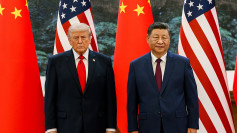
President Donald Trump has maintained strong support for Taiwan arms sales but has also emphasized his personal relationship with Chinese President Xi Jinping during recent meetings in Beijing. That balancing act has become increasingly delicate as tensions surrounding trade, technology restrictions and military strategy converge.
China itself has remained comparatively restrained in response to the latest Russian rhetoric, at least publicly. Beijing has continued condemning American arms sales and military cooperation with Taiwan while avoiding explicit endorsement of Moscow's more dramatic World War III framing.