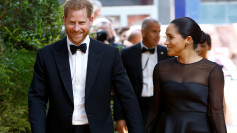
Prince Harry reignited debate over his infamous 2005 Nazi costume scandal this week after publishing a lengthy essay on antisemitism in the UK, a move that coincided with King Charles III meeting Jewish leaders and victims of antisemitic violence in London.
The article, published Thursday in the New Statesman, saw Harry reflect on what he called his "past mistakes" while warning about rising hostility toward Jewish communities amid tensions linked to the Israel-Gaza conflict and protests across Britain.
The timing immediately drew scrutiny from royal commentators and British media because the essay appeared on the same day Charles visited members of London's Jewish community, including survivors of a recent stabbing attack police classified as antisemitic.
Harry, who stepped back from royal duties in 2020 and now lives in California with Meghan Markle, framed the piece as a broader argument about the dangers of extremism and blurred political rhetoric.
"I am acutely aware of my own past mistakes, thoughtless actions for which I have apologised, taken responsibility and learned from," Harry wrote, referring to the scandal that erupted after photographs showed him attending a costume party dressed in a Nazi uniform with a swastika armband.
"That experience informs my conviction that clarity matters now more than ever, at a time when confusion and the distortion of truth are doing real harm, even when speaking plainly is not without consequence," he added.
The Duke also argued that demonstrations connected to the Middle East conflict must clearly distinguish criticism of governments from hatred directed toward Jewish people. He described the current climate as "deeply troubling" and warned that silence allows extremism to spread unchecked.
The essay marked one of Harry's most politically sensitive public interventions since leaving Britain. While he has continued to speak publicly on veterans' affairs, media reform and mental health, his comments on antisemitism and protest movements placed him more directly inside Britain's increasingly polarised domestic debate.
At nearly the same moment Harry's article was circulating online, Charles was carrying out a markedly different form of engagement in north London. During a visit with Jewish community representatives, the King met Moshe Shine, who survived a stabbing attack in April that authorities described as antisemitic.
"He was very concerned. He didn't let go of my hand, I mean it was amazing, he is the King, but I felt a genuine warmth and concern," Shine later said of the encounter. He described Charles as "inspiring."
Witnesses gathered outside the engagement reportedly shouted "God save the King" as Charles greeted community members and listened to accounts of rising fear among British Jews.
The contrast between the father and son quickly became part of the wider public conversation. Charles addressed antisemitism through symbolic royal presence and personal meetings, while Harry approached the issue through written commentary and political reflection from abroad.
The King has spent years positioning himself as a supporter of interfaith dialogue and Jewish causes. Buckingham Palace noted previously that Charles became patron of the Community Security Trust shortly after antisemitic attacks in Golders Green, part of what aides describe as his broader effort to represent all faith communities.
That approach has also shaped Charles' public role since becoming monarch. His 2023 coronation included participation from leaders of multiple religions, reflecting his long-stated belief that the Crown should serve a diverse modern Britain.
Unlike Harry, however, Charles remains bound by constitutional neutrality. The monarch can meet victims, faith leaders and charities, but avoids direct political commentary on contested issues surrounding protests, policing or Middle East policy.
Harry faces no such constitutional limits, but critics argue that freedom also carries reputational risks, particularly when his public interventions overlap with royal engagements involving his father.