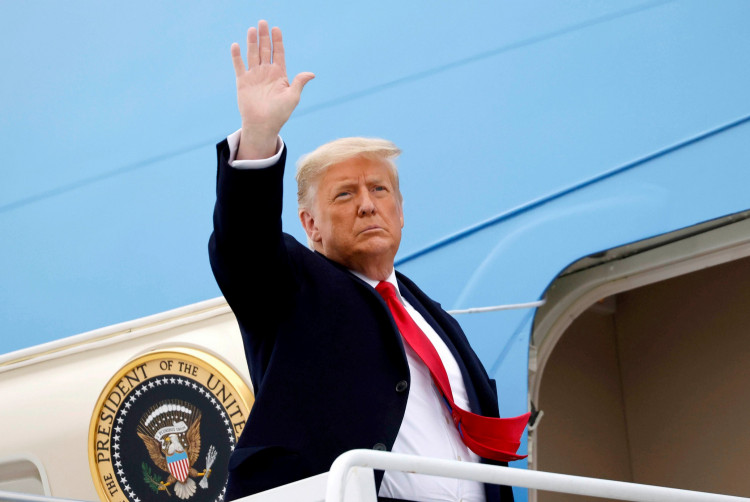
Photos showing bruising and bandages on President Donald Trump's hands prompted fresh questions about his health this week, drawing a public explanation from the White House that attributed the marks to a combination of frequent handshaking and a daily aspirin regimen disclosed in prior medical reports.
White House Press Secretary Karoline Leavitt addressed the issue during a regular press briefing after images circulated online showing faint purple discoloration across the backs of the president's hands. The pictures fueled speculation on social media about whether Trump was dealing with an undisclosed medical condition, prompting reporters to seek clarification.
Leavitt framed the bruising as a byproduct of the president's schedule rather than a medical concern. She described the Oval Office as "like Grand Central Terminal," emphasizing the volume of visitors and meetings that require repeated physical greetings throughout the day.
"He's literally constantly shaking hands," Leavitt said, explaining that the repetitive contact contributes to visible bruising, particularly when paired with medication that affects blood clotting.
Leavitt added that Trump is "on a daily aspirin regimen," a detail previously included in his physical examinations. Aspirin is known to thin the blood and can increase the likelihood of bruising, especially in older adults or those with frequent minor impacts.
The explanation was intended to quell speculation without delving into new medical disclosures. Administration officials did not indicate that Trump had sought treatment related to the bruising or that it reflected any change in his health status.
The briefing also touched on Trump's recent claims about cognitive testing. Reporters asked Leavitt when the president had taken the three cognitive tests he recently referenced on Truth Social, where he said he had "aced" them.
Leavitt declined to provide details at the time. She said she could "do that at a later date" and acknowledged she did not have specifics available during the briefing. She referred journalists back to Trump's own past statements, noting that he had "spoken about that quite extensively throughout the years."
The exchange highlighted how visual cues-such as bandages or bruising-can quickly become politically charged when they involve a sitting president. Trump has frequently invoked cognitive testing as a way to underscore his mental fitness, often contrasting his results with those of political rivals.
Health disclosures have long been a sensitive area for presidents of both parties, balancing public transparency with personal privacy. In this case, the White House opted for a straightforward explanation grounded in routine behavior and previously acknowledged medication use.
Leavitt's remarks portrayed a presidency defined by constant interpersonal contact, suggesting the marks were an occupational side effect rather than a signal of illness. For supporters, the account reinforced an image of a president deeply engaged with visitors. For critics, it underscored ongoing questions about how much detail the administration is willing to provide regarding health-related matters.