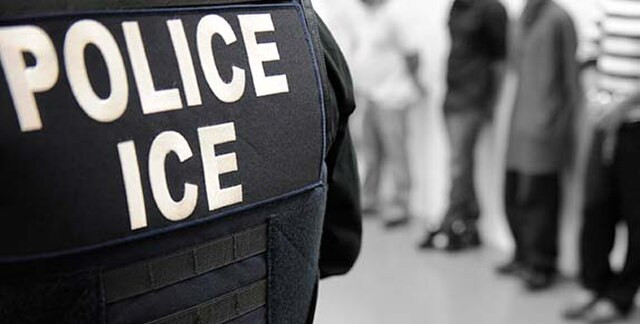
The Trump administration has expanded immigration enforcement into U.S. airports by directing the Transportation Security Administration to share passenger information with Immigration and Customs Enforcement, a move that allows agents to screen travelers against deportation databases and make arrests before boarding. The policy, first reported by The New York Times, marks a significant shift in how domestic aviation security infrastructure is used in immigration enforcement.
Under the new directive, ICE receives TSA passenger lists and can flag travelers who have existing removal orders. Agents may then be dispatched to airports to detain individuals prior to departure, effectively turning routine air travel into a point of immigration enforcement rather than solely a security checkpoint.
Tricia McLaughlin, a Department of Homeland Security spokesperson, framed the change as a deterrent, saying, "The message to those in the country illegally is clear: the only reason you should be flying is to self-deport home." DHS officials argue the measure helps locate individuals already ordered removed by immigration courts.
Former officials and analysts, however, question both the scope and the effectiveness of the strategy. Claire Trickler-McNulty, who served as a senior ICE official during the Biden administration, warned of operational strain, saying, "If you have more officers conducting arrests at airports, it puts more strain on the system... and those who are unsure about their status will move away from air travel."
While the administration has not released national arrest figures tied to the program, a former ICE official said roughly 75% of referrals generated by the initiative in their region resulted in arrests. That figure underscores how quickly passenger screening can translate into enforcement action once names are flagged.
One documented case involves Any Lucía López Belloza, a 19-year-old student detained at Boston Logan International Airport on Nov. 20. According to her account, she passed through TSA security using her Honduran passport, bought coffee and attempted to board her flight when her boarding pass failed to scan. She recalled that a federal agent told her, "Oh, you are Any," before she was taken into custody. Another agent later said, "You are coming with us, and you will be doing a lot of paperwork."
Ms. López said she was unaware of a 2018 deportation order issued when she was a minor. At the time of her arrest, she was a freshman at Babson College and was deported to Honduras two days later. She is now exploring options to continue her education there.
Immigrant-rights advocates say the airport program risks detaining people with little notice and limited access to legal counsel. Robyn Barnard, senior director of refugee advocacy at Human Rights First, said, "This is yet another attempt to terrorize and punish communities, and as a result, people will be terrified of even leaving their homes because they will be afraid of being arbitrarily detained and disappearing without a trace before they are given the chance to challenge their detention."
The initiative follows earlier efforts by the administration to use other federal databases to locate immigrants for enforcement, including an attempt to access Internal Revenue Service address records. That effort was blocked by a federal court in November, prompting DHS to rely more heavily on transportation data already held by the federal government.
Supporters of the policy view airports as efficient enforcement points because travelers are already identified and screened. Critics counter that the approach blurs the line between civil immigration enforcement and public security functions, potentially deterring lawful travel and complicating airport operations at some of the nation's busiest hubs.