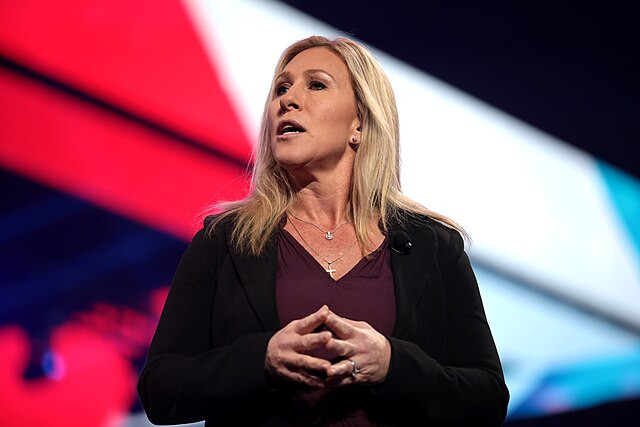
A widening rupture between former President Donald Trump and Rep. Marjorie Taylor Greene has spilled into public view after the Georgia Republican said Trump personally warned her that releasing records tied to Jeffrey Epstein would harm people close to him. The claim, delivered in recent interviews and online remarks, has intensified scrutiny of how the Epstein case continues to reverberate through U.S. politics years after the financier's death.
Greene said the disagreement marked the breaking point in what had once been one of Trump's most loyal political alliances. According to her account, the conflict centered on whether the former president would follow through on campaign promises to release documents related to Epstein, whose 2019 death in federal custody ended a sweeping sex-trafficking prosecution.
"The Epstein files represent everything wrong with Washington," Greene said, describing the issue as emblematic of entrenched power protecting itself. She said the dispute went beyond politics and became, in her view, a moral test tied to accountability for sexual abuse.
Greene claimed she raised the issue directly with Trump and was stunned by his response. She said he told her, "My friends will get hurt," a remark she interpreted as a refusal to pursue full disclosure. Greene said the exchange convinced her that confronting elite protection around Epstein mattered more than party loyalty.
She also said she urged Trump to invite survivors of Epstein's abuse to the White House, portraying the gesture as symbolic recognition of their suffering. According to Greene, Trump rejected the idea and said the women did not "deserve" such recognition. That moment, she said, crystallized a growing divide between them.
Greene has framed her break with Trump as a matter of principle rather than ideology. "Everyone's like, 'She's changed.' I haven't changed my views," she said. "But I've matured. I've developed depth. I've learned Washington, and I've come to understand the brokenness of the place." She added that the Epstein case represented "rich, powerful elites doing horrible things and getting away with it."
Trump's name has appeared in some Epstein-related materials released over the years, though he has not been accused of criminal wrongdoing. The former president has previously acknowledged knowing Epstein socially but has said he later cut ties. The continued release of documents and renewed political attention have kept the issue alive across partisan lines.
Trump's campaign moved quickly to rebut Greene's claims. David Ingle, a campaign spokesperson, said Greene was acting out of resentment and accused her of abandoning Trump's political movement. Ingle said Trump remains "the undisputed leader of the greatest and fastest growing political movement in American history," and characterized Greene's criticism as disloyalty rather than principle.
The dispute has unfolded alongside Greene's decision to leave Congress. She confirmed her resignation would take effect Monday, Jan. 5, closing a turbulent chapter marked by confrontations with party leadership and frequent media attention. In a recorded message announcing her departure, Greene said Trump had branded her a traitor for siding with Epstein's victims.
"Standing up for American women who were raped at 14, trafficked, and used by rich powerful men should not result in me being called a traitor and threatened by the President of the United States," she said. She added that she would not serve as the president's "battered wife," language that underscored the depth of the rupture.