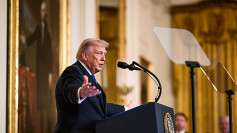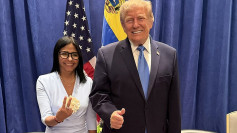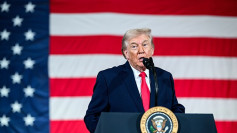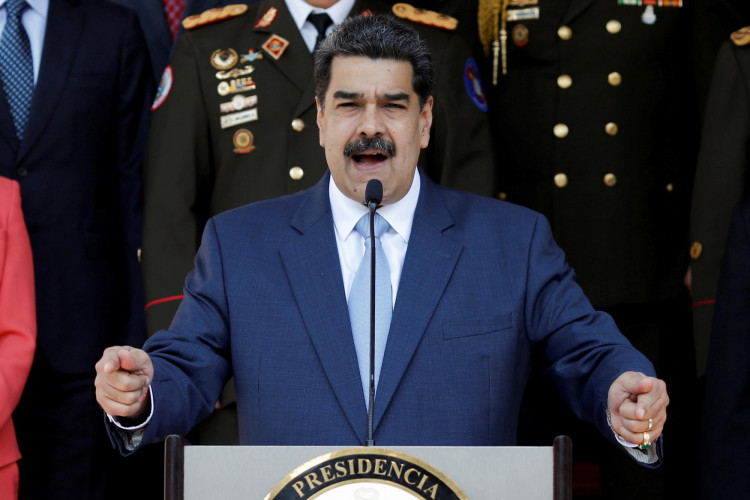
President Donald Trump's announcement that U.S. forces had seized Venezuelan leader Nicolás Maduro was not only a military shock but a strategic one, triggering urgent questions across capitals about why Washington chose this moment to act and what it stands to gain from one of the most consequential interventions in Latin America in decades.
The overnight operation in Caracas, which Trump described as "brilliant," immediately drew condemnation from regional governments, Russia and international legal experts, who warned that the move risked destabilizing an already fragile hemisphere. Yet administration officials and outside advisers point to a convergence of long-standing U.S. objectives-oil access, migration control and narcotics enforcement-that have increasingly narrowed Trump's options.
At the center of the calculation is energy. Venezuela holds the world's largest proven oil reserves, yet U.S. sanctions and years of mismanagement have sidelined its production. American officials argue that removing Maduro could unlock energy flows at a time when global markets remain sensitive to geopolitical shocks. Critics counter that regime change through force risks prolonged instability that could further disrupt supply rather than stabilize it.
Migration pressure has also sharpened Washington's focus. Millions of Venezuelans have fled economic collapse over the past decade, with large numbers reaching the U.S. southern border. Trump has repeatedly linked Maduro directly to what he calls a "manufactured migrant crisis," framing the Caracas government as both a humanitarian and domestic political liability.
Drug trafficking forms the third pillar. Trump and senior U.S. officials have accused Maduro's inner circle of enabling transnational criminal networks, including the Tren de Aragua gang, a charge Caracas denies. The administration has argued that maritime strikes and the seizure of sanctioned oil tankers were precursors to a broader enforcement campaign aimed at dismantling what it describes as a "narco-state."
The costs of that strategy became immediately visible. Regional leaders warned the action could normalize cross-border regime change and provoke retaliation. Russia labeled the strikes "armed aggression," while several Latin American governments called for emergency meetings at the United Nations and the Organization of American States.
Legal scholars also questioned the precedent. Absent clear congressional authorization, they said, the operation risks undermining U.S. credibility on sovereignty and international law-especially as Washington seeks to constrain similar actions by rivals elsewhere.
Market and diplomatic fallout underscored the uncertainty:
- Commercial aviation was halted over Venezuelan airspace.
- Energy traders flagged heightened volatility tied to potential supply disruptions.
- Multiple governments demanded clarification on civilian casualties and custody claims.
Even allies privately expressed concern that Trump's move compressed complex geopolitical objectives into a single, high-stakes action with no clear transition plan. Opposition figures inside Venezuela suggested the possibility of back-channel negotiations, though neither Washington nor Caracas has confirmed such talks.