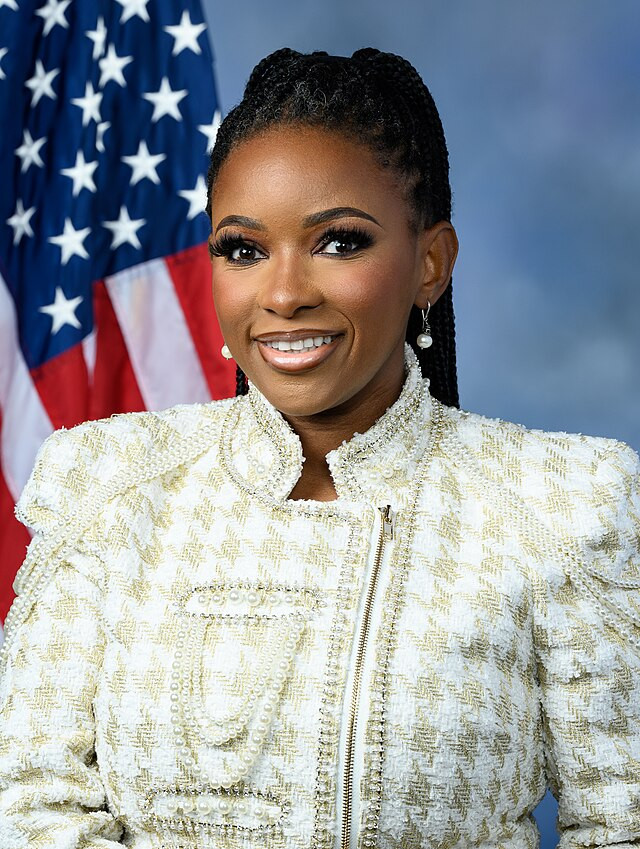
Rep. Jasmine Crockett, a Democratic candidate in Texas' U.S. Senate primary, said CBS' decision not to air an interview with her opponent, state Rep. James Talarico, may have strengthened his campaign rather than hurt it, adding a media subplot to an already competitive race.
Appearing on MS Now, Crockett addressed The Late Show with Stephen Colbert's choice to bypass broadcast and instead release the segment online. "I think it was a good strategy. Look at what happened when they tried to censor CECOT. We found out you could get a lot more views," she said, referencing a postponed CBS News 60 Minutes segment about El Salvador's CECOT prison that later drew heightened attention.
Crockett, who represents Texas' 30th Congressional District, framed the move as a tactical calculation rather than a political slight. "It probably gave my opponent the boost that he was looking for. So i think it's probably better that they went straight to streaming. We know that when they try to change the rules it backfires in historic fashion," she concluded.
The decision not to air Talarico's interview has prompted speculation about equal-time rules and network legal guidance. Federal Communications Commission regulations require broadcasters to provide equal opportunities to legally qualified candidates for public office under certain circumstances. Talarico has rejected suggestions that FCC "guidance" was the reason the segment did not air.
In a statement Tuesday, Talarico accused the Trump administration of interfering. "This is the party that ran against cancel culture, and now they are trying to control what we watch, what we say, and what we read," he said.
He escalated his criticism further, adding: "This is the most dangerous kind of cancel culture - the kind that comes from the top. Corporate media executives are selling out the First Amendment to curry favor with corrupt politicians. A threat to any of our First Amendment rights is a threat to all of our First Amendment rights."
CBS has not publicly detailed its legal rationale for the decision. On The Late Show, host Stephen Colbert acknowledged constraints placed on him by network attorneys. "Because my network clearly doesn't want us to talk about this, let's talk about this," Colbert said.
Colbert went further, directly criticizing the administration: "Let's just call this what it is. Donald Trump's administration wants to silence anyone who says anything bad about Trump on TV, because all Trump does is watch TV."
The episode illustrates how entertainment platforms have become extensions of political battlegrounds. In a crowded Texas Democratic primary, late-night television exposure can offer valuable visibility. For candidates, the strategic value of a network appearance-aired nationally or posted digitally-can shape momentum in a race where fundraising, turnout, and media narrative are tightly intertwined.
The dispute also underscores broader tensions between media companies, regulatory frameworks, and political campaigns. Equal-time rules were designed for traditional broadcasting, yet the line between television and streaming content has blurred. As candidates increasingly leverage digital platforms, decisions about what airs on broadcast versus online can have outsized political consequences.