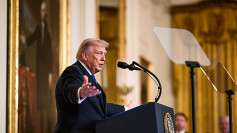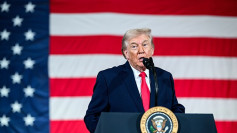
Donald Trump on Tuesday opened a new front in already strained U.S.-Europe relations, publicly deriding Emmanuel Macron and threatening to impose a 200% tariff on French wine and champagne after Paris declined to participate in a U.S.-backed global security initiative.
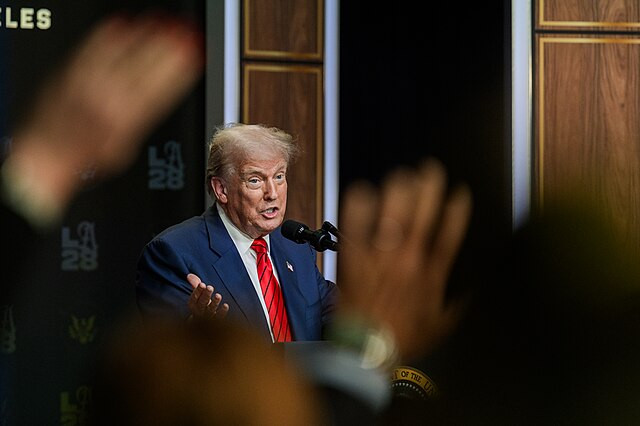
Speaking to reporters, Trump dismissed the French president's standing and linked punitive trade measures to Macron's reported refusal to join a newly proposed "Board of Peace," an international conflict-resolution body that would require participating countries to commit roughly $1 billion for long-term membership. "Nobody wants him because he will be out of office very soon," Trump said, adding that economic pressure could compel cooperation.
The comments triggered immediate concern in European capitals and sent ripples through global markets, where investors are already bracing for renewed trade volatility. The dispute marks one of the most personal public clashes between two leaders of allied nations in recent years and raises the prospect of another transatlantic trade confrontation.
According to draft documents circulated to dozens of governments late last year, the Board of Peace would oversee mediation efforts in global conflicts, beginning with Gaza, and would operate alongside existing multilateral frameworks. The proposal envisions Trump serving as its inaugural chairman, with participating states contributing substantial funding for continued membership.
French officials signaled reservations, citing questions about governance, legal authority and overlap with established institutions such as the United Nations. Macron's advisers privately expressed concern that the initiative could marginalize existing diplomatic mechanisms rather than complement them.
In an unusual breach of diplomatic convention, Trump amplified the dispute by posting what he said was a private text message from Macron. The message described Paris and Washington as "totally in line on Syria" and suggested cooperation on Iran, while questioning U.S. actions regarding Greenland. People familiar with the exchange said the message was authentic, though Macron's office declined to comment publicly.
The economic stakes are significant. The United States is France's largest export market for wine and spirits, with shipments valued at approximately $4.45 billion in 2024. Industry groups warned that a 200% tariff would effectively price French wine and champagne out of the U.S. market, disrupting supply chains and threatening thousands of jobs.
Market reaction was swift. Shares of major French luxury and beverage companies fell amid reports of the tariff threat, while trade analysts cautioned that even the prospect of such duties injects uncertainty into an already fragile global economy.
European officials are now weighing potential countermeasures. Leaders within the European Union have discussed emergency retaliatory tariffs and possible use of the bloc's Anti-Coercion Instrument, designed to respond to what it defines as economic intimidation by third countries.
The episode unfolds against a backdrop of broader U.S.-Europe friction, including disputes over Greenland and earlier tariff threats against multiple NATO allies. Diplomats in Paris, Berlin and Brussels warned that using trade policy to pressure allied governments risks eroding the postwar transatlantic framework built on cooperation and mutual security.