The Trump administration is facing renewed scrutiny over its handling of the Jeffrey Epstein investigation records after a prominent journalist accused the Justice Department of improperly redacting documents in a way that allegedly exposed victims while continuing to shield powerful figures linked to the late financier.
Lucia Osborne-Crowley, an award-winning journalist who has written extensively about sexual violence and institutional failures surrounding the Epstein case, said in an interview published by The Guardian on March 9 that the Justice Department's approach to releasing investigative files raised serious legal and ethical concerns.
Her criticism comes amid continuing efforts by survivors to obtain broader access to FBI and Justice Department records tied to Epstein, who died in a New York jail in 2019 while awaiting trial on federal sex-trafficking charges. Prosecutors had alleged that Epstein operated a wide-ranging network that trafficked and abused underage girls, with the assistance of British socialite Ghislaine Maxwell.
Osborne-Crowley described mixed reactions among survivors as more documents have gradually emerged. "It's so complicated. They feel very validated on some levels," she said, referring to victims who have spent years demanding greater transparency. Yet she said the manner in which certain documents were redacted raised troubling questions.
She described it as "really shocking" that the Justice Department would release documents in which victims' names were allegedly exposed while the identities of influential individuals connected to Epstein remained concealed.
The controversy intensified as Osborne-Crowley elaborated on what she believes are flaws in how the records were prepared for release. She argued that federal law allows the withholding of victims' names but does not authorize the kind of selective protection that leaves survivors exposed while protecting others.
"So you've got the executive branch breaking the law, and in a way that's sloppy," Osborne-Crowley said.
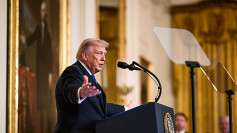
Her remarks have emerged as congressional scrutiny of the administration's handling of the Epstein documents continues to grow. According to reporting cited in the source material, Attorney General Pam Bondi was subpoenaed last week by the House Oversight Committee in connection with the government's handling of the files and allegations related to the suppression of sexual assault claims involving President Donald Trump.
None of the claims made by Osborne-Crowley have been independently confirmed in the reporting cited in the source article, and no formal finding has established wrongdoing by the Justice Department.
Beyond the legal debate over document redactions, Osborne-Crowley argued that public attention often misses the broader meaning of the Epstein scandal. In her view, media coverage has focused heavily on well-known figures associated with Epstein-including Maxwell and Britain's Prince Andrew-while the experiences of victims receive less sustained attention.
She said the case ultimately reflects deeper issues involving grooming, sexual abuse and the systems that allowed the operation to function for years.
Osborne-Crowley also recounted encounters that she said illustrate the atmosphere of intimidation surrounding the investigation. She said that during a trip from London to Miami in September 2022 to interview Epstein survivor Carolyn Andriano in West Palm Beach, Andriano told her a private investigator had already appeared after learning she planned to speak for Osborne-Crowley's book.
Later that same day, Osborne-Crowley said she was approached by another man who questioned her about her reporting, offered her drugs and money, and suggested arranging a meeting with one of Epstein's pilots.
According to Osborne-Crowley, the encounter escalated when the man touched her inappropriately and waited in a parking lot, prompting her to leave the building through staff-only exits. She described the episode as part of a broader pattern of intimidation directed at those examining the case.
Osborne-Crowley said two women who had initially agreed to participate in her book later withdrew after receiving threats. She suggested that some of the pressure may have come from individuals "not yet facing charges."
Reflecting on the fear many victims experienced, she recalled warnings she said Ghislaine Maxwell once delivered to girls involved in Epstein's network. Maxwell would tell them that if they ever spoke publicly, "we will find you and we will stop you." Osborne-Crowley added that, in her view, "in a lot of ways, that promise was kept."