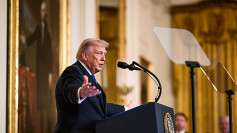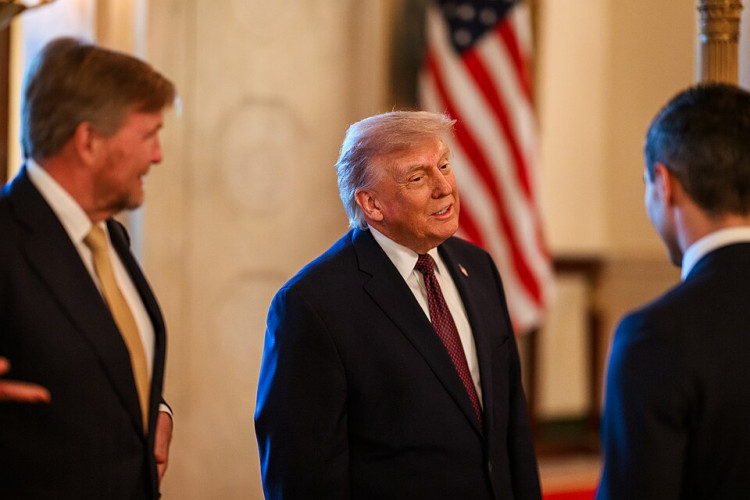
Donald Trump has dismissed all members of the National Science Board, a move that removes the independent oversight panel guiding the National Science Foundation and its roughly $9 billion annual budget, according to notifications sent to board members on April 24.
The abrupt action, confirmed by multiple current and former board members, has triggered immediate criticism from lawmakers and researchers who say the decision risks undermining long-standing governance structures designed to insulate federal science policy from political turnover.
Members received identical messages from the Presidential Personnel Office informing them of their removal. The notice read: "On behalf of President Donald J. Trump, I'm writing to inform you that your position as a member of the National Science Board is terminated, effective immediately." The communication provided no explanation for the dismissals.
Keivan Stassun, a Vanderbilt University astronomer who joined the board in 2022, said initial reports suggested partial removals before it became clear that all 24 members had been dismissed. He noted that the emails were "boilerplate" and lacked any substantive justification, reinforcing concerns about the sudden nature of the decision.
The National Science Board, established in 1950, plays a central role in overseeing the NSF's research agenda and approving major funding priorities. Its structure-up to 25 scientists and engineers serving staggered six-year terms-was designed to ensure continuity across administrations and preserve independence in federal science policy.
Marvi Matos Rodriguez, one of the terminated members, emphasized that design. "The idea of having six-year terms is you get to do something significant, impactful and go beyond administrations, political administrations," she said. She added that the role required extensive commitment, noting: "I serve the board at nights and on weekends."
The NSF's funding portfolio has historically supported foundational technologies with broad economic impact. Among the innovations linked to NSF-backed research are:
- Mobile communications technologies
- Magnetic resonance imaging (MRI) systems
- LASIK eye surgery
The timing of the dismissals has intensified scrutiny, coming as the administration has proposed significant reductions in federal science spending. After Congress rejected a proposed 55% cut last year, new budget proposals for fiscal year 2027 again target substantial reductions, raising questions about the future direction of U.S. research funding.
Representative Zoe Lofgren sharply criticized the move. "This is the latest stupid move made by a president who continues to harm science and American innovation," she said. She added: "The NSB is apolitical. It advises the president on the future of NSF. It unfortunately is no surprise a president who has attacked NSF from day one would seek to destroy the board that helps guide the foundation."
The leadership vacuum at the NSF adds another layer of uncertainty. The agency has operated without a permanent director since Sethuraman Panchanathan stepped down in April 2025. Trump nominated Jim O'Neill in March 2026, but the nomination has yet to receive a Senate hearing.
The dismissals also follow a series of broader personnel changes across federal science and health agencies. In recent months, the administration has canceled more than 1,000 research grants and removed advisory board members across institutions, including actions involving vaccine advisory committees and National Institutes of Health panels.