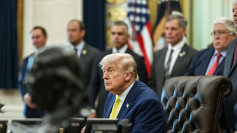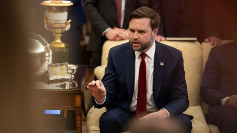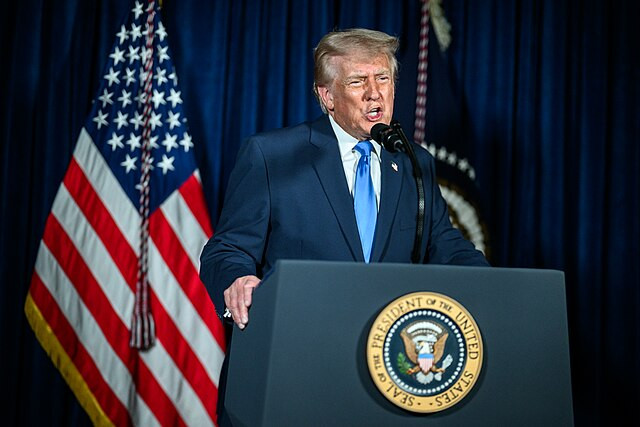
Donald Trump said a settlement to the war in Ukraine could be approaching "soon," unveiling a new international Board of Peace as he met global leaders at the World Economic Forum in Davos, a move that places Washington at the center of a renewed push to resolve one of Europe's most destructive conflicts since World War II.
Speaking Wednesday in Switzerland, Trump said negotiations aimed at ending the war were "getting close" and warned that failure would carry lasting consequences. "We've got to get it done. If we don't get that done, it would be a disgrace," Trump told reporters outside the forum's main venue, as he confirmed fresh diplomatic engagement with Kyiv and Moscow.
The comments followed a face-to-face meeting with Volodymyr Zelensky in Davos, underscoring the administration's effort to accelerate talks nearly three years after Russia's invasion. Zelensky is scheduled to address the World Economic Forum later this week, potentially clarifying Kyiv's view of the negotiations Trump described as nearing a breakthrough.
At the center of Trump's diplomatic push is the newly launched Board of Peace, an alternative conflict-resolution framework Trump said would work "alongside" existing institutions. The board, announced on stage with leaders including Argentina's Javier Milei and Hungary's Viktor Orbán, is intended to address conflicts beginning with Ukraine and Gaza, according to administration officials.
The initiative has drawn skepticism from major powers, including China and France, which have declined to participate amid concerns the board could rival the United Nations. BBC security correspondent Frank Gardner questioned the project's viability, asking: "Can this much-trumpeted Board of Peace actually deliver what it sets out to? That is, resolving conflicts, starting with Gaza. That is what matters most here."
Despite doubts, several Middle Eastern governments-Saudi Arabia, Qatar, Turkey, Egypt and Israel-have signaled support, giving the board early geopolitical weight. Analysts note that Trump's previous 20-point Gaza peace proposal, widely criticized at launch, nonetheless contributed to a ceasefire, even if it fell short of lasting stability.
Alongside Ukraine diplomacy, Trump used Davos to press discussions over Arctic security, meeting NATO Secretary General Mark Rutte to outline what he called a "framework of a future deal" involving Greenland. Trump later said he would withdraw threatened tariffs on European allies, describing the emerging arrangement as "the kind of deal that I wanted to be able to make," while calling the details "a little bit complex."
NATO and Denmark moved quickly to clarify that no sovereignty concessions were under discussion. "The secretary general did not propose any compromise to sovereignty during his meeting with the president in Davos," a NATO spokesperson said. Danish Prime Minister Mette Frederiksen told local media that "no negotiation over ownership has taken place."
Greenland's Deputy Prime Minister Múte Egede was more direct, writing on Facebook that any transfer of control would be "unacceptable," adding that the island's future "should not be gambled with."
Attention remains focused on Ukraine, where Trump's special envoy Stephen Witkoff and son-in-law Jared Kushner are traveling to Moscow for further talks. Russian President Vladimir Putin has signaled willingness to contribute $1 billion to the Board of Peace, according to state media, a proposal that could ignite debate in Western capitals over frozen Russian assets and Moscow's role in any settlement.