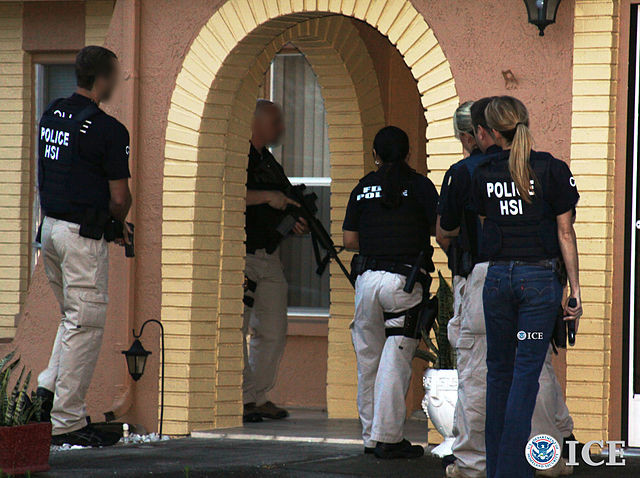
A newly disclosed internal memo from U.S. Immigration and Customs Enforcement asserts that immigration officers may enter private homes without a judge's warrant, marking a significant escalation in federal enforcement authority and raising fresh constitutional questions as immigration operations intensify nationwide.
The guidance, obtained and reported by Associated Press, was signed in May 2025 by acting ICE director Todd Lyons. It instructs officers that an administrative arrest warrant-issued internally by immigration authorities-can be sufficient to justify forced entry into a residence when executing a final removal order, even in the absence of a warrant approved by a judicial magistrate.
According to the memo, officers are required to knock, identify themselves and state their purpose before entering. It authorizes operations between 6 a.m. and 10 p.m. and permits what it describes as "necessary and reasonable force" if occupants do not comply within a "reasonable" period of time.
For decades, ICE policy and public guidance from legal advocates have emphasized that immigration officers generally need either consent or a judicial warrant to enter a private residence. Administrative warrants-commonly known as I-205 forms-have traditionally been used to make arrests in public spaces, not to justify warrantless entry into homes.
The memo reflects a revised legal interpretation by the Department of Homeland Security Office of the General Counsel, expanding the role of administrative warrants in ways that legal experts say push against long-standing Supreme Court precedent protecting the sanctity of the home under the Fourth Amendment.
The shift comes amid a broader expansion of immigration enforcement under President Donald Trump, whose administration has increased deportation targets, hired additional officers and emphasized rapid execution of final removal orders. Critics argue the new guidance lowers the legal threshold for one of the most intrusive actions the government can take.
Concerns have been heightened by how the memo has circulated internally. Whistleblowers told the nonprofit Whistleblower Aid that the document was not broadly distributed, but instead shown selectively during training sessions, sometimes under supervision and without allowing copies or notes. The group said it took months to safely disclose the memo to Congress.
The policy's practical impact has already surfaced. Earlier this month, AP reporters witnessed immigration officers forcibly entering a home in Minneapolis while executing an arrest. Officers carried rifles and relied solely on an ICE administrative warrant, according to documents reviewed by the news agency. No judicial warrant was presented during the operation.
DHS officials defend the practice, arguing that individuals subject to administrative warrants already have final removal orders and have received due process through immigration courts. A department spokesperson said officers issuing such warrants possess sufficient probable cause to carry out arrests.
Civil liberties groups dispute that rationale, warning that the memo erodes a core constitutional protection by allowing executive-branch officials to determine when homes can be entered by force. They also cite internal ICE training materials that historically instructed officers that administrative warrants do not authorize home entry without consent or a court order.