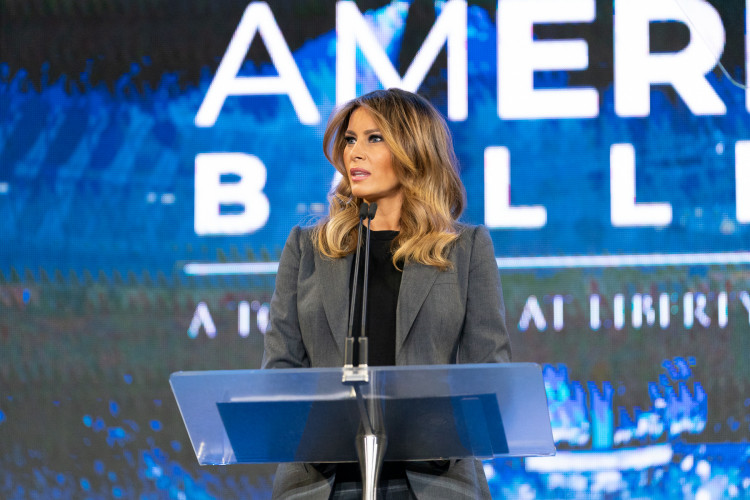
Claims of a $7 million opening weekend for a documentary centered on Melania Trump drew renewed scrutiny this week after Jimmy Kimmel questioned whether reported ticket sales reflected genuine audience demand or bulk purchases that left theaters largely empty. The remarks, delivered on late-night television, sharpened a debate already circulating among exhibitors and online commenters about how box-office success is being measured.
On the Feb. 4 edition of his show, Kimmel responded to claims that the film delivered the strongest opening for a non-musical documentary in a decade. "I think that's a fancy way of saying it only lost tens of millions of dollars," he said, before adding: "A lot of people, myself included, have been wondering how this movie managed to sell $7 million worth of tickets last weekend when almost every theater was deemed to be empty leading up to the release."
Kimmel suggested an explanation that has traveled quickly online: bulk purchases. He said reports indicated that "beautiful box office numbers" were boosted by "bulk ticket purchases" that were "handed out to people for free." He added that "sources" claimed blocks of tickets were distributed to "Republican activists," extending the joke to include "senior citizens' homes" and quipping that the two groups are "really the same thing."
The allegation echoed a familiar precedent. In 2019, the Republican National Committee spent $94,800 on copies of Donald Trump Jr.'s book, a purchase disclosed as "donor mementos" and reported by The New York Times, which helped propel the title to the bestseller list. The episode has become a shorthand for how bulk buying can manufacture the appearance of popularity.
Industry math has added to the skepticism. Amazon MGM Studios paid $40 million for the documentary's rights and spent an additional $35 million on marketing, according to Fortune, a figure the outlet described as unprecedented for the genre. CNN likewise called the sums "eye-poppingly high" and noted it was unlikely the studio would recoup costs from box-office sales alone.
Trade reporting has focused on mechanics rather than rhetoric. The Hollywood Reporter said the film debuted in third place with an estimated $7 million from 1,175 theaters and cited sources indicating an exclusive theatrical window of at least 10 days. The outlet also reported audience demographics skewing older-78% aged 55 and up-and predominantly female, with 72% women, figures that have fueled questions about who, exactly, bought opening-weekend tickets.
Kimmel has kept the critique running. Two nights earlier, he joked the project carried a $75 million budget and labeled the opening "the biggest opening for a non-musical-vanity-project-slash-brazen-corporate-bribe in 10 years." He later mocked praise from Fox News commentator Kayleigh McEnany and riffed on awards-season hypotheticals.
He closed with an absurd flourish, imagining "Melania winning the first-ever FIFA Best Actress award," a nod to President Trump's recent FIFA honor presented by Gianni Infantino. Beneath the punchlines, the episode has revived a broader industry question: whether box-office tallies increasingly measure revenue booked rather than seats filled, and how easily the optics of success can be staged when marketing budgets are vast and scrutiny is uneven.