Senior figures in President Donald Trump's political orbit are warning that Republican prospects in the 2026 midterm elections are deteriorating, not because of a surge in Democratic popularity but because of a measurable drop in enthusiasm among voters who once formed the core of Trump's support.
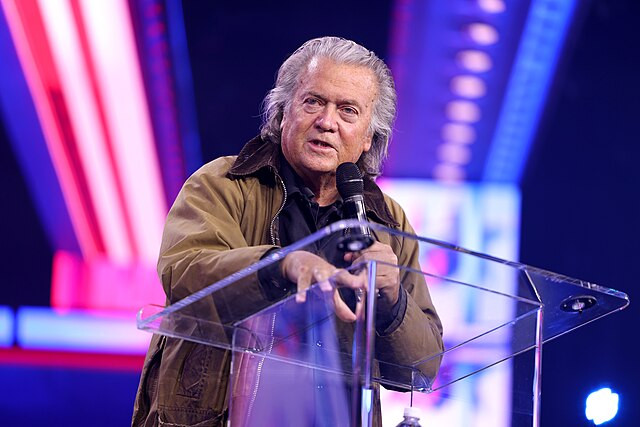
The warning was delivered publicly by Steve Bannon, the former White House strategist, who said on his War Room broadcast that Republicans are facing "trouble" heading into the midterms due to what he described as a "massive lack of enthusiasm among the base." Bannon said the concern was grounded in recent polling conducted by Rich Baris and Mark Mitchell rather than political instinct alone.
Polling data released in late January by Baris's Big Data Poll shows Democrats leading Republicans 46.1% to 42% on the first generic House ballot of the 2026 cycle among likely voters. While the margin itself remains within historical swing territory, the poll suggests the gap has edged toward Democrats since late 2025.
The deeper concern for Republicans lies in turnout intensity. Among voters who describe themselves as "Extremely Enthusiastic" about voting in 2026, Democrats hold a 53.6% to 41.8% advantage. After allocating undecided respondents, that margin widens to 54.6% to 42.3%. Baris wrote: "If Republicans are going to experience a comeback, something has got to change sooner rather than later."
Other surveys point in a similar direction. A January Emerson College poll showed Democrats ahead 48.1% to 41.7% on the generic ballot, while a Fox News survey gave Democrats a 52-46 lead, their strongest showing so far in the 2026 cycle. The Washington Stand characterized the combined data as showing a "moderate lead" for Democrats.
Mark Mitchell, Rasmussen Reports' chief pollster, argued in an opinion piece published by RealClearPolitics that Trump's 2024 victory was driven less by ideological realignment than by voter belief that Trump would impose consequences on entrenched institutions. Mitchell wrote that Trump succeeded because voters viewed him as "the one guy who might make the system feel consequences."
Mitchell said that appeal has weakened. He noted that when the administration emphasized systemic accountability, including anti-corruption efforts such as the DOGE initiative, Trump's approval among voters under 40 briefly reached about 60%. Since that effort faded and the administration became consumed by what Mitchell described as "unfocused" messaging, support among under-40 voters has fallen into the low 40s.
"Rather than doubling down on systemic accountability," Mitchell wrote, "the last few months have felt unfocused, with counter-signaling on affordability and jobs, infighting, the Epstein saga, renewed foreign entanglements and a governing posture that feels reactive rather than intentional."
The unease has spread beyond pollsters. Marjorie Taylor Greene, once one of Trump's most vocal allies, said in a recent interview: "MAGA is... I think people are realizing it was all a lie. It was a big lie for the people." She added that the movement "serves the big donors" while those donors receive "special favours, the government contracts, [and] the pardons."