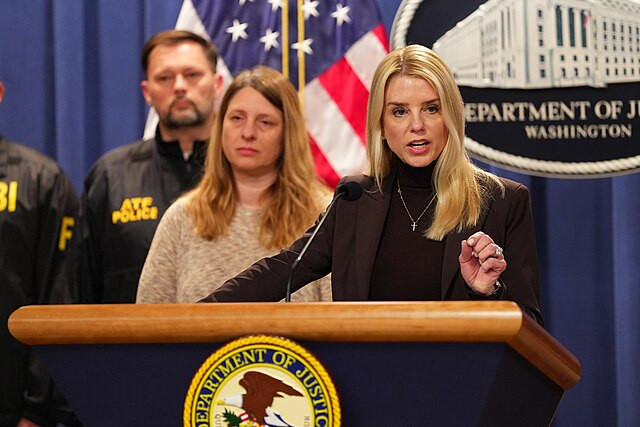
Attorney General Pam Bondi faced sustained bipartisan criticism on Feb. 11 during a House Judiciary Committee hearing examining the Justice Department's handling of records tied to Jeffrey Epstein, as lawmakers questioned whether the document release process advanced transparency or shielded politically sensitive figures.
The hearing followed passage of the Epstein Files Transparency Act, legislation requiring federal agencies to disclose millions of pages of investigative material linked to Epstein's trafficking network. While substantial volumes of documents have been released, lawmakers from both parties argued that extensive redactions have complicated public understanding of the files.
Democratic members accused the department of disproportionately obscuring the identities of alleged enablers and associates while failing to adequately protect survivors' information. Several cited early release batches in which victims' names were inadvertently published before being corrected, calling the mistake an avoidable harm.
Republican lawmakers, though differing in emphasis, also raised procedural concerns. Some questioned whether the redaction standards were applied consistently and whether the review process was sufficiently insulated from political influence.
A central point of contention was the contrast between visible victim information and heavily blacked-out contextual details surrounding individuals named in the files. Critics argued that the imbalance risked retraumatizing survivors without delivering meaningful accountability for alleged co-conspirators.
Bondi defended the department's approach, stating that career officials applied uniform standards in accordance with federal privacy law. She told the committee that hundreds of Justice Department lawyers had reviewed materials under tight deadlines to ensure compliance. She rejected claims of political interference and maintained that redaction decisions were made on legal, not partisan, grounds.
When pressed to issue a formal apology for the inadvertent disclosure of victims' names, Bondi declined to do so directly. She reiterated that her office had expressed sympathy and would continue prioritizing privacy protections.
Survivors and advocates present at the hearing described the process as incomplete and emotionally taxing. Some argued that partial transparency risks prolonging uncertainty rather than providing closure. Lawmakers indicated that further oversight hearings remain possible, and several floated the idea of an independent review of the redaction process to restore public confidence.
Online reaction mirrored the political divide inside the hearing room, with critics questioning whether the department's actions reflected cautious legal stewardship or protective insulation for influential individuals. Years after Epstein's death in federal custody, the files continue to serve as a flashpoint in Washington, underscoring unresolved tensions over transparency, accountability and institutional trust.