President Donald Trump's immigration enforcement strategy is encountering mounting resistance from federal courts, state governments and Democratic lawmakers, placing U.S. Immigration and Customs Enforcement at the center of a widening political and legal confrontation ahead of the 2026 election.
The latest flashpoint came when Judge Joseph Goodwin of the U.S. District Court for the Southern District of West Virginia issued a sharply worded opinion criticizing ICE for conducting arrests while agents wore masks and operated from unmarked vehicles. Goodwin described the tactics as a "secret-policing regime" and warned that such anonymity undermines constitutional accountability.
The ruling adds judicial weight to growing concerns over due process and transparency in interior immigration operations. Courts in several jurisdictions have increasingly scrutinized ICE practices, questioning whether aggressive enforcement methods align with constitutional protections.
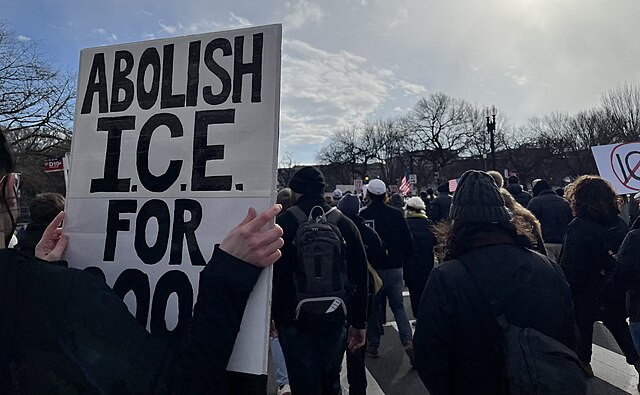
The legal pushback coincides with rising political rhetoric. On Feb. 23, 2026, Representative Maxine Dexter, a Democrat from Oregon, compared the administration's immigration crackdown to "terrorism" during a town hall event and pledged that if Democrats regain control, they would seek to dismantle ICE.
Dexter's remarks reflect a broader shift among some Democrats who are increasingly willing to challenge the structure and authority of the agency itself. ICE, established in 2003 following the creation of the Department of Homeland Security, has long been a lightning rod in immigration debates.
State governments are also asserting resistance. Maryland recently filed a lawsuit to block construction of a new ICE detention facility, citing concerns over environmental review and public consultation. Other jurisdictions are exploring measures to restrict masked enforcement operations or limit cooperation with federal immigration authorities.
Public activism has intensified in parallel. Protests in Minnesota and other cities in early 2026 drew thousands following federal operations criticized as overly aggressive. Advocacy groups have focused attention on family separations, detention conditions and fatalities linked to enforcement actions.
The dispute now spans multiple arenas:
- Federal court rulings challenging enforcement tactics
- State lawsuits aimed at blocking detention expansion
- Congressional calls to dismantle ICE
- Sustained nationwide protests
Supporters of the administration argue that expanded enforcement is essential to uphold immigration law and deter unlawful entry. Critics counter that tactics such as masked arrests and unmarked vehicles erode civil liberties and public trust.
The debate is unfolding as immigration remains a defining issue of Trump's presidency and a central campaign theme. With ICE's budget, operational authority and structure under renewed examination, the agency has become both a symbol of federal immigration enforcement and a focal point for constitutional disputes over executive power.