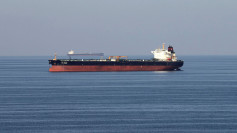
Brent crude climbed above $82 a barrel this week after Iran's Revolutionary Guards warned commercial vessels not to transit the Strait of Hormuz, triggering a sharp drop in tanker traffic and intensifying fears of a global recession if the disruption persists.
The escalation follows coordinated U.S.-Israeli strikes on Feb. 27 targeting Iranian leadership and nuclear infrastructure. In response, Tehran declared the strategic waterway closed. While U.S. Central Command has said the strait is not "legally" shut, insurers have withdrawn coverage for ships attempting to pass through, effectively deterring most commercial traffic.
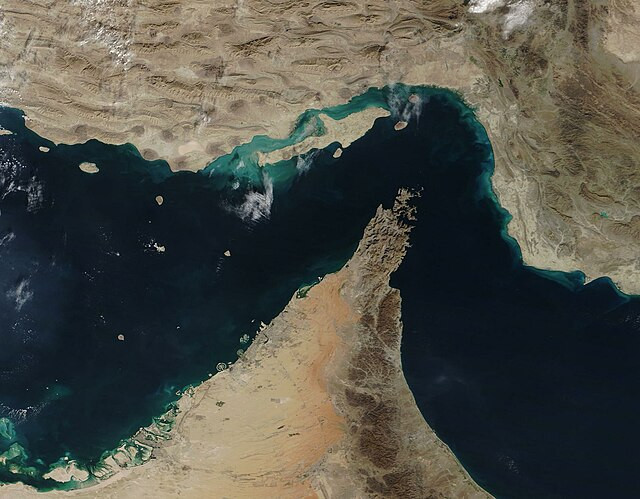
Around one-third of global seaborne oil exports and roughly one-fifth of natural gas shipments pass daily through the narrow channel between Iran and Oman. Energy analysts say the current slowdown-estimated at a 70% reduction in traffic-has already begun to strain global supply chains.
On state television, Iranian Brigadier General Ebrahim Jabari declared: "The price of oil has reached $81/bbl, and the world is certainly waiting for it to reach at least $200. The Strait of Hormuz is closed. Our heroes in the Islamic Revolutionary Guard Corps Navy and the Army will set fire to any ships that wish to pass through this strait."
Brent crude rose 6.5% Tuesday to $82.85 a barrel, extending a three-day rally. U.S. gasoline prices have moved back above $3 a gallon. Analysts warn that if oil climbs above $100 and remains elevated, inflation pressures could accelerate globally.
Capital Economics estimates that sustained $100 oil would add between 0.6 and 0.7 percentage points to global inflation. Bernstein this week raised its 2026 Brent forecast to $80 per barrel from $65 but said prices could reach $150 in a prolonged conflict scenario.
Bob McNally, a former White House energy adviser, offered a stark assessment: "A prolonged closure of the Strait of Hormuz is a guaranteed global recession."
Rapidan Energy Group analysts described recession as a "near certainty" if shipping remains severely curtailed. The group said the current traffic collapse has already disrupted supply flows and could quickly tighten physical markets.
The economic implications extend beyond energy. Higher crude prices typically ripple through transportation, manufacturing and consumer goods. If inflation accelerates while growth slows, central banks could face a stagflationary dilemma.
The U.S. Federal Reserve normally raises interest rates to contain inflation. However, tightening monetary policy during a growth slowdown would heighten recession risks. Analysts note that policymakers may confront limited options if oil-driven inflation coincides with weakening economic activity.
Meanwhile, reports emerged that four oil tankers near the Strait were attacked over the weekend, further elevating insurance premiums and security concerns. Even without a formal legal closure, the physical threat posed by drones and mines has created what shipping executives describe as a de facto blockade.
Key data points shaping market reaction include:
- Brent crude above $82 per barrel.
- A reported 70% drop in tanker traffic.
- One-third of global seaborne oil transiting Hormuz.
- Inflation impact of up to 0.7 percentage points if oil holds at $100.