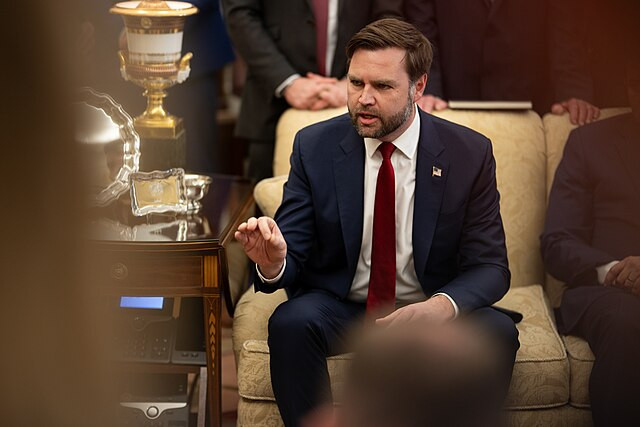
Vice President JD Vance is facing mounting criticism after suggesting some unidentified aerial phenomena may be "demonic," drawing a sharp rebuke from disclosure advocate Steven Greer, who warned the framing could provoke widespread public panic as the U.S. government moves toward greater transparency on UFO-related material.
The controversy stems from remarks Vance made during an appearance on The Benny Show in late March, where he discussed unidentified aerial phenomena-commonly referred to as UFOs-and indicated that not all sightings should be interpreted as extraterrestrial. Instead, he suggested some could be "the devil's great tricks," a characterization that has since fueled debate across political, scientific and online communities.
The comments gained traction after coverage by the New York Post, which highlighted Vance's suggestion that UFOs could be "demons" in a widely circulated social media post. The framing quickly drew criticism from researchers and disclosure advocates who argue that such interpretations risk undermining efforts to present the phenomenon through scientific and national security lenses.
Greer, founder of the Disclosure Project and a longtime advocate for government transparency on UFOs, responded forcefully in a video titled "It's Not Demons: JD Vance Is Wrong About UFOs." He questioned the vice president's understanding of classified material and warned that mischaracterizing unidentified aerial phenomena could have serious consequences.
"If this issue comes out wrongly, it would be one of the most catastrophic events in human history," Greer said, framing the stakes in terms of public reaction and geopolitical stability. He added that narratives linking UFOs to religious or supernatural explanations could inflame extremist interpretations or trigger broader societal disruption.
The exchange comes at a moment when federal agencies, including the Pentagon, have increased the pace of disclosures related to unidentified aerial phenomena. The U.S. government has gradually shifted terminology from UFOs to UAPs (unidentified aerial phenomena), signaling an effort to treat sightings as a matter of defense analysis rather than speculation.
Greer has argued that most observed craft are not extraterrestrial but instead derived from advanced human technology, claiming such developments date back decades. His position remains controversial within both scientific and policy communities, but he has continued to advocate for broader public engagement and declassification efforts.
The broader policy environment has also evolved, with increased congressional and executive branch interest in formalizing disclosure frameworks. Reports of domain registrations such as aliens.gov and ongoing Pentagon file releases have added to public anticipation, even as officials have released limited details about the scope of available evidence.
Critics of Vance's remarks say the episode reflects a growing tension between political rhetoric and the need for disciplined communication on sensitive national security topics. As public interest accelerates, analysts note that how leaders frame the issue-whether through scientific, military or ideological lenses-could shape both domestic perception and international response.