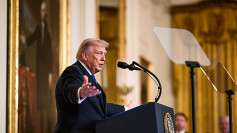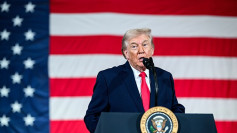
Donald Trump said his administration is preparing to release long-classified records related to unidentified aerial phenomena, telling reporters that U.S. military pilots "saw things you wouldn't believe" as the White House moves toward broader disclosure.
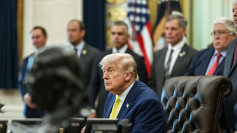
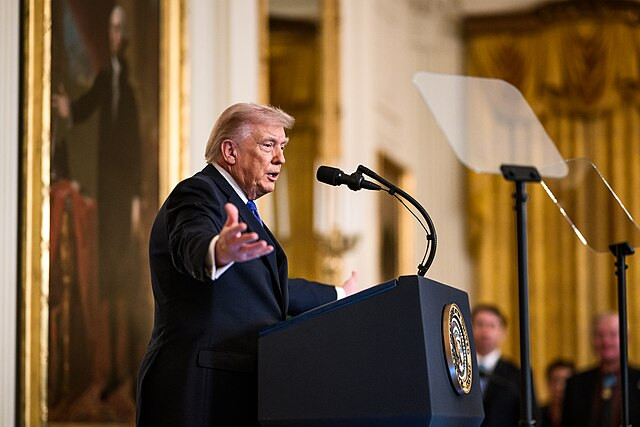
Speaking during a media briefing in Washington on April 29, Trump indicated that "as much as we can" would be made public "in the near future," signaling what could become one of the most expansive releases of government-held material on the subject in decades. The remarks come amid sustained interest in aerial incidents previously investigated by the U.S. Department of Defense and other federal agencies.
Trump framed the forthcoming disclosure around accounts from aviators, stating, "They said they saw things you wouldn't believe!" He added, "And you're gonna be reading about it." The president did not specify which agencies would be involved in the declassification process or how much information might remain redacted.
The comments reflect a gradual shift in how such phenomena are treated within official channels. Once dismissed as fringe speculation, what are now formally termed "unidentified aerial phenomena" have increasingly been subject to structured review following prior Pentagon reports and declassified footage.
Despite the rhetoric, Trump stopped short of confirming what the documents would contain. No evidence has been presented publicly to suggest the files will substantiate claims of extraterrestrial technology or unknown craft, and the administration has not released a timeline for publication beyond a general commitment to act soon.
The briefing took place with members of the NASA Artemis II crew standing behind the president, adding a contrasting scientific backdrop to the discussion. Trump praised the astronauts, including Reid Wiseman, Victor Glover, Christina Koch and Jeremy Hansen, saying, "It takes people like this to make our country great." He added, "We're very proud of these people. They have unbelievable courage."
The juxtaposition highlighted a divide between two domains of aerial activity: one grounded in measured, transparent space exploration, the other defined by limited data and unresolved observations. Artemis II, which launched April 1 and returned April 10, carried astronauts farther from Earth than any mission since the Apollo era.
Trump referenced that milestone in context, noting the mission exceeded the distance record set by Apollo 13. The administration did not link the Artemis program to the unidentified aerial phenomena under discussion, and NASA officials have not indicated any connection between spaceflight operations and the sightings described.