Donald Trump signed an executive order this week directing the creation of a new retirement savings pathway aimed at millions of Americans without employer-sponsored plans, tying expanded access to individual retirement accounts with a federal matching contribution of up to $1,000 annually.
The initiative, which will be implemented through a new federal platform, TrumpIRA.gov, beginning in 2027, is designed to address a persistent gap in retirement coverage. Research from Pew Charitable Trusts estimates that roughly 56 million U.S. workers lack access to workplace retirement plans such as 401(k)s.
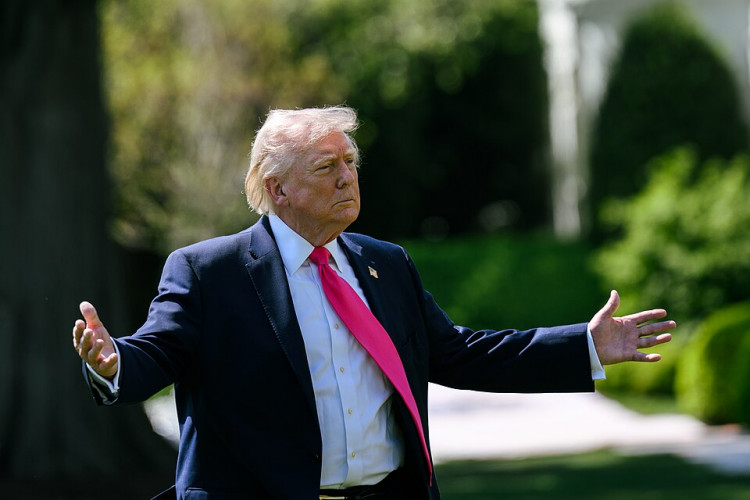
Speaking at a White House press conference, Trump said the program would align private-sector savings tools with benefits traditionally available only to federal employees. "You'll then be able to access the same type of retirement accounts that federal employees enjoy through the Thrift Savings Plan... Low-income Americans will be eligible to receive up to $1,000 per year in matching funds deposited directly into their accounts," he said.
The policy builds on provisions from the Secure 2.0 Act, enacted in 2022, which introduced the Saver's Match program. Under current rules set to take effect in the 2027 tax year, qualifying individuals can receive a government match equal to 50% of up to $2,000 in retirement contributions.
Eligibility thresholds outlined in the legislation include:
- Single filers earning up to $20,500 qualify for the full match
- Joint filers earning up to $41,000 qualify for the full match
- Partial matches apply to single filers earning between $20,500 and $35,500
- Maximum federal contribution capped at $1,000 annually
Despite the structure already in place, access remains uneven. According to the Economic Innovation Group, approximately 26 million workers eligible for the Saver's Match currently lack a retirement account, preventing them from claiming the benefit.
The White House initiative aims to close that gap by centralizing access through a government-backed comparison and enrollment platform. Officials say the website will allow users to evaluate private-sector IRA options and enroll directly, lowering administrative barriers that have historically limited participation.
Economists have suggested the financial impact could be material for lower-income households. A 2025 analysis from Morningstar projected that eligible workers could see a 12% increase in retirement wealth due to the federal match, assuming consistent participation over time.
Policy experts say the proposal reflects a broader shift toward supplementing Social Security with individualized savings mechanisms. Teresa Ghilarducci, a professor at The New School, said, "Establishing a universal retirement system to companion with Social Security was always needed, and its time has come."
Still, questions remain about participation rates. Shai Akabas of the Bipartisan Policy Center emphasized behavioral challenges in voluntary savings programs. "We know that the significant majority of people are unlikely to take these proactive steps on their own. That's why the call for legislative action is also really critical as part of the conversation here," Akabas told CNBC.